
Blog
Sterile or Bacteriostatic: Making the Right Choice for Your Peptides

Why Your Choice of Water is Critical for Peptide Research
Choosing between sterile water or bacteriostatic water for peptides is a critical decision when preparing research compounds. The wrong solvent can lead to contamination, peptide degradation, and unreliable results.
Quick Answer:
- Bacteriostatic Water (0.9% benzyl alcohol) is the gold standard for multi-dose peptide vials. It prevents bacterial growth, keeping reconstituted peptides stable for up to 28 days when refrigerated.
- Sterile Water (no preservatives) is only for immediate, single-use applications. Once opened, it offers no protection against contamination.
- The key difference: Bacteriostatic water allows repeated use of the same vial over weeks, while sterile water must be used immediately or discarded.
When you reconstitute lyophilized peptides, you create a solution that must remain sterile and stable. As one source notes, “reconstituting peptides correctly is fundamental to peptide research. Get it wrong, and you could denature your peptide, contaminate it, or miscalculate doses.”
The choice impacts everything from peptide integrity to experimental consistency. Bacteriostatic water contains 0.9% benzyl alcohol, a preservative that inhibits bacterial growth, allowing researchers to draw multiple doses from one vial. Sterile water, lacking this preservative, becomes vulnerable to contamination the moment you insert a needle.
Most research peptides remain stable for 2-4 weeks when reconstituted with bacteriostatic water and refrigerated. Without that protection, peptides mixed with sterile water degrade quickly. At Pivot Labs, our Peptide Innovation & Research Team has seen how this choice can make or break a project. This guide will help you make the right decision for your work.
Defining the Solvents: Bacteriostatic vs. Sterile Water
In peptide research, understanding your solvent is paramount. The stability of your peptides and the integrity of your findings hinge on choosing the right one. This choice comes down to solvent composition, the presence of preservatives, and sterility. For more on this, explore our article on More info about peptide sterility.
What is Bacteriostatic Water?
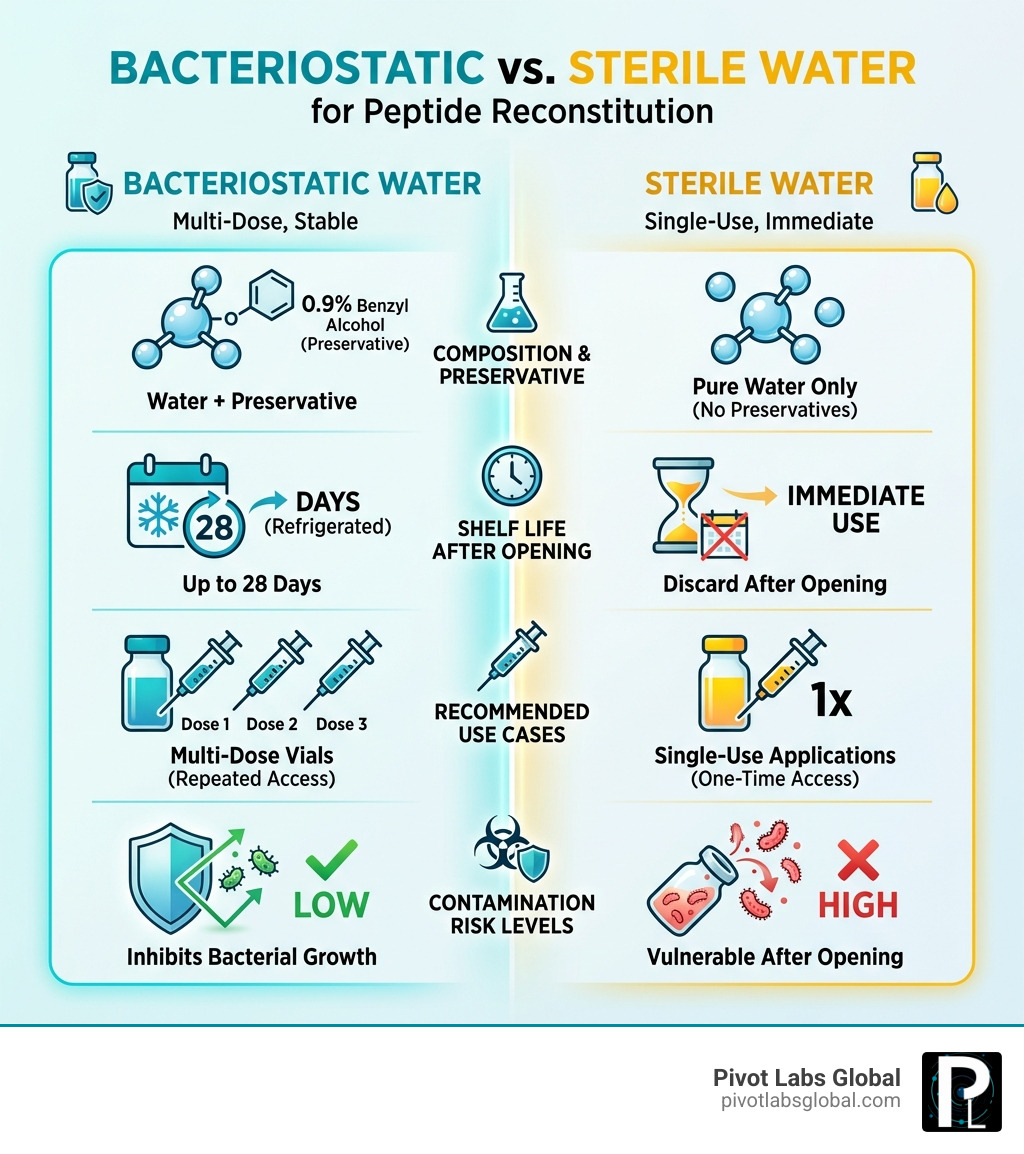
Bacteriostatic water is the hero for multi-dose peptide applications. It is sterile water for injection with a crucial addition: 0.9% benzyl alcohol. This agent inhibits bacterial growth, stopping microbes from multiplying and maintaining sterility over time.
This composition is a game-changer. The benzyl alcohol allows a vial to be used for multiple doses, as it prevents contamination after the first puncture. This allows researchers to re-enter the vial for up to 28 days, making it convenient and cost-effective for ongoing projects. When sourcing, look for “Bacteriostatic Water for Injection, USP” to ensure quality, such as our Bac Water.
What is Sterile Water?
Sterile water for injection is purified, sterilized water, free from microorganisms and safe for immediate use. The critical distinction is that it contains no preservatives.
This lack of a bacteriostatic agent means sterile water is for single-use only. Once a vial is opened, its sterility is compromised, and any introduced bacteria can grow unchecked. This gives it a short shelf life of only 6-12 hours before it must be discarded. For this reason, sterile water is reserved for situations where the entire vial is used at once.
Key Differences at a Glance
To summarize the critical distinctions between these two essential solvents, let’s look at a quick comparison:
| Feature | Bacteriostatic Water | Sterile Water |
|---|---|---|
| Preservative | 0.9% Benzyl Alcohol | None |
| Shelf Life (After Opening) | Up to 28 days (refrigerated, with sterile technique) | Approximately 6-12 hours (must be used immediately) |
| Recommended Use | Multi-dose peptide reconstitution | Single-use, immediate peptide reconstitution |
| Contamination Risk (After Opening) | Low (due to preservative) | High (no preservative) |
| Cost-Effectiveness for Multi-Dose | High (can be used repeatedly) | Low (must be discarded after first use) |
Sterile Water or Bacteriostatic Water for Peptides: Making the Right Choice
The decision between sterile water or bacteriostatic water for peptides directly impacts peptide stability, contamination risk, and research consistency. The benzyl alcohol in bacteriostatic water offers significant advantages for the integrity of your peptide solutions.
Why Bacteriostatic Water is the Gold Standard for Most Peptides
For most peptide research, bacteriostatic water is the undisputed gold standard. Its 0.9% benzyl alcohol preservative provides a unique combination of benefits that sterile water cannot match for multi-dose vials.
- Multi-Dose Capability & Reduced Risk: The preservative prevents bacterial growth after the vial is opened, allowing for multiple, safe withdrawals from the same vial. This drastically reduces contamination risk compared to sterile water, which becomes a breeding ground for bacteria once opened.
- Extended Stability & Potency: By preventing microbial contamination, bacteriostatic water helps maintain the peptide’s integrity and potency. Reconstituted solutions can be stored safely for up to 28 days when refrigerated, which is vital for long-term experiments.
- Cost-Effectiveness: The ability to use a single vial multiple times reduces waste and makes bacteriostatic water a more economical choice for ongoing research. For larger volumes, our Bac Water 30ml offers even greater value.
In short, bacteriostatic water combines sterility with a robust defense against bacterial proliferation, ensuring your peptides remain potent and your research consistent.
The Risks of Using Sterile Water for Multi-Dose Peptide Vials
Using sterile water for multi-dose peptide vials is risky and can compromise your research. The primary concern is bacterial contamination. Without a preservative, any bacteria introduced into the vial will proliferate rapidly. As research highlights, “sterile water lacks preservatives, meaning it cannot prevent bacterial growth once the vial is opened.”
This contamination leads to rapid peptide degradation, as bacterial byproducts break down delicate peptide structures. The result is a loss of efficacy, inconsistent data, and potentially unsafe solutions. Its vulnerability to contamination makes sterile water a poor choice for any peptide solution requiring multiple withdrawals.
When to Consider Sterile Water
Despite its risks for multi-dose use, sterile water is appropriate in specific scenarios:
- Single-Use Applications: If you will reconstitute a peptide and use the entire vial immediately, sterile water is acceptable. The risk of contamination is minimal if you use a strict aseptic technique.
- Peptides Sensitive to Benzyl Alcohol: A small number of peptides may be sensitive to benzyl alcohol, which could affect their stability. Always check the manufacturer’s instructions for any contraindications.
- Preservative-Sensitive Cell Cultures: In some in vitro research with sensitive cell cultures, benzyl alcohol could be cytotoxic. In these cases, sterile water is preferred for immediate, single-use applications.
Our rule of thumb: if your solution needs to last more than a few hours or requires multiple doses, bacteriostatic water is the safer, more reliable choice.
The Reconstitution Process: A Step-by-Step Guide
Reconstituting peptides becomes routine with the proper technique. The goal is to ensure aseptic handling, protect the peptide’s fragility, and achieve a homogeneous solution. Remember: be gentle, be sterile, and be accurate.
Essential Supplies for Reconstitution
Gathering your tools beforehand streamlines the process and minimizes contamination risk.
- Lyophilized peptide vial: The freeze-dried peptide powder.
- Bacteriostatic water: Our preferred solvent, such as our Bac Water 30ml.
- Sterile syringes: Insulin or mixing syringes (e.g., 3mL) for precise measurement.
- Alcohol swabs: For sanitizing vial tops.
- Clean workspace: A disinfected, clutter-free area.
- Sharps container: For safe disposal of used needles.
How to Properly Reconstitute Peptides
Follow these steps for proper reconstitution:
- Preparation: Allow the peptide and bacteriostatic water vials to reach room temperature. Wash your hands and clean your workspace.
- Sanitize Stoppers: Thoroughly wipe the rubber stoppers on both vials with an alcohol swab and let them air dry.
- Draw Water: Using a sterile syringe, draw up the calculated amount of bacteriostatic water.
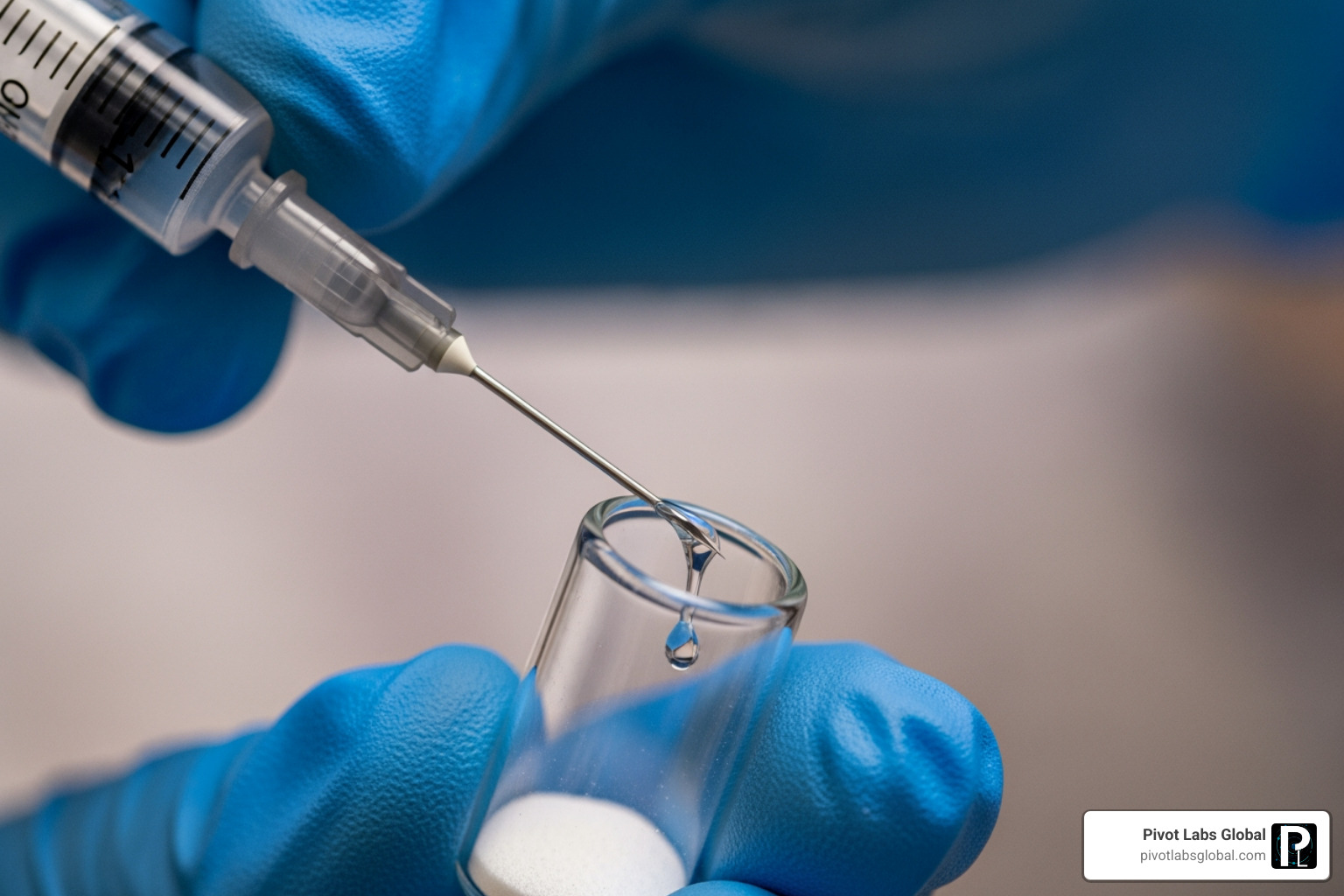
- Inject Slowly: Insert the needle into the peptide vial. Aim the needle so the water runs slowly down the inside wall of the vial, not directly onto the powder. This gentle method prevents foaming and protects the peptide.
- Gentle Swirling (No Shaking!): Do NOT shake the vial. Instead, gently swirl it or roll it between your palms until the powder is fully dissolved. This usually takes 1-5 minutes.
- Labeling: Immediately label the vial with the peptide name, concentration (e.g., 5mg/ml), and the date of reconstitution.
Following these best practices is essential. For more detailed guidance, you can refer to resources like the USP peptide infographic which outlines procedures for handling sensitive standards.
Storage, Stability, and Special Considerations
Proper storage is as vital as proper reconstitution for maintaining peptide stability and efficacy. How you store your reconstituted peptides directly influences the success of your research.
Proper Storage of Reconstituted Peptides
Once reconstituted with bacteriostatic water, proper storage is paramount.
- Refrigeration at 2-8°C: This is the golden rule. Store vials upright in the refrigerator (36-46°F or 2-8°C) to slow degradation.
- The 28-Day Rule: Bacteriostatic water provides protection for up to 28 days after first use. Use your reconstituted peptide within this timeframe and discard it afterward.
- Protect from Light: Many peptides are light-sensitive. Store vials in a dark place, like their original box, to prevent photo-degradation.
- Avoid Freeze-Thaw Cycles: Do not freeze reconstituted peptides. Ice crystal formation can damage peptide molecules, leading to a loss of efficacy. This is a last resort and should only be done if a specific peptide’s protocol validates it.
Are there peptides that should not be used with bacteriostatic water?
While bacteriostatic water is the standard, a small number of peptides may have a benzyl alcohol sensitivity. This preservative can, in rare cases, alter a peptide’s stability or activity. Always consult the specific instructions or technical data sheet provided with your peptide. If a peptide is noted as being sensitive, use sterile water for immediate, single-use applications. For the vast majority of research peptides, however, bacteriostatic water is the best choice.
Bacteriostatic Water vs. Bacteriostatic Saline
You may also encounter bacteriostatic saline, which is 0.9% sodium chloride (salt) solution with 0.9% benzyl alcohol. The key difference is the salt content.
- Solubility: The salt in saline can impact peptide solubility, sometimes causing precipitation. Bacteriostatic water’s simpler composition avoids this risk.
- When to Use: Saline is sometimes required for specific peptides that need an isotonic environment for stability. However, for general reconstitution, bacteriostatic water is preferred. If your peptide protocol calls for saline, use bacteriostatic saline to get the preservative benefits.
For most research, bacteriostatic water is the go-to solvent due to its broad compatibility and effective preservation.
Frequently Asked Questions
Here are answers to common questions researchers have about peptide reconstitution.
How much bacteriostatic water should I use to mix my peptides?
This is a critical question for dosage accuracy. The amount of sterile water or bacteriostatic water for peptides depends on your desired concentration and the amount of peptide in the vial. The goal is to create a concentration that is easy and accurate to dose.
Example Calculation for a 5mg (5,000 mcg) peptide vial:
- Add 1ml of water: Concentration = 5mg/ml. 0.1ml (10 units on an insulin syringe) = 500 mcg.
- Add 2ml of water: Concentration = 2.5mg/ml. 0.1ml (10 units) = 250 mcg. (A common choice).
- Add 2.5ml of water: Concentration = 2mg/ml. 0.1ml (10 units) = 200 mcg.
Always double-check your calculations and refer to any specific protocols for your peptide, as some have optimal concentrations for stability.
What are the potential side effects of benzyl alcohol in bacteriostatic water?
The 0.9% benzyl alcohol concentration is generally safe for research purposes, but it’s good to be aware of potential effects:
- Injection Site Irritation: Some users may feel mild, temporary stinging. Allowing the solution to reach room temperature before administration can help.
- Low Risk in Research Doses: The amount of benzyl alcohol in typical research doses is very low, and systemic side effects are rare in adults.
- Neonatal Contraindication: Benzyl alcohol is contraindicated in neonates due to a severe condition known as “gasping syndrome.” This is not a risk in adult research applications.
For research, the benefits of preventing bacterial contamination far outweigh the minimal risks associated with benzyl alcohol.
How do I know if my bacteriostatic water or reconstituted peptide is contaminated?
Vigilance is key to ensuring research integrity. Before each use, visually inspect your solution for these signs of contamination:
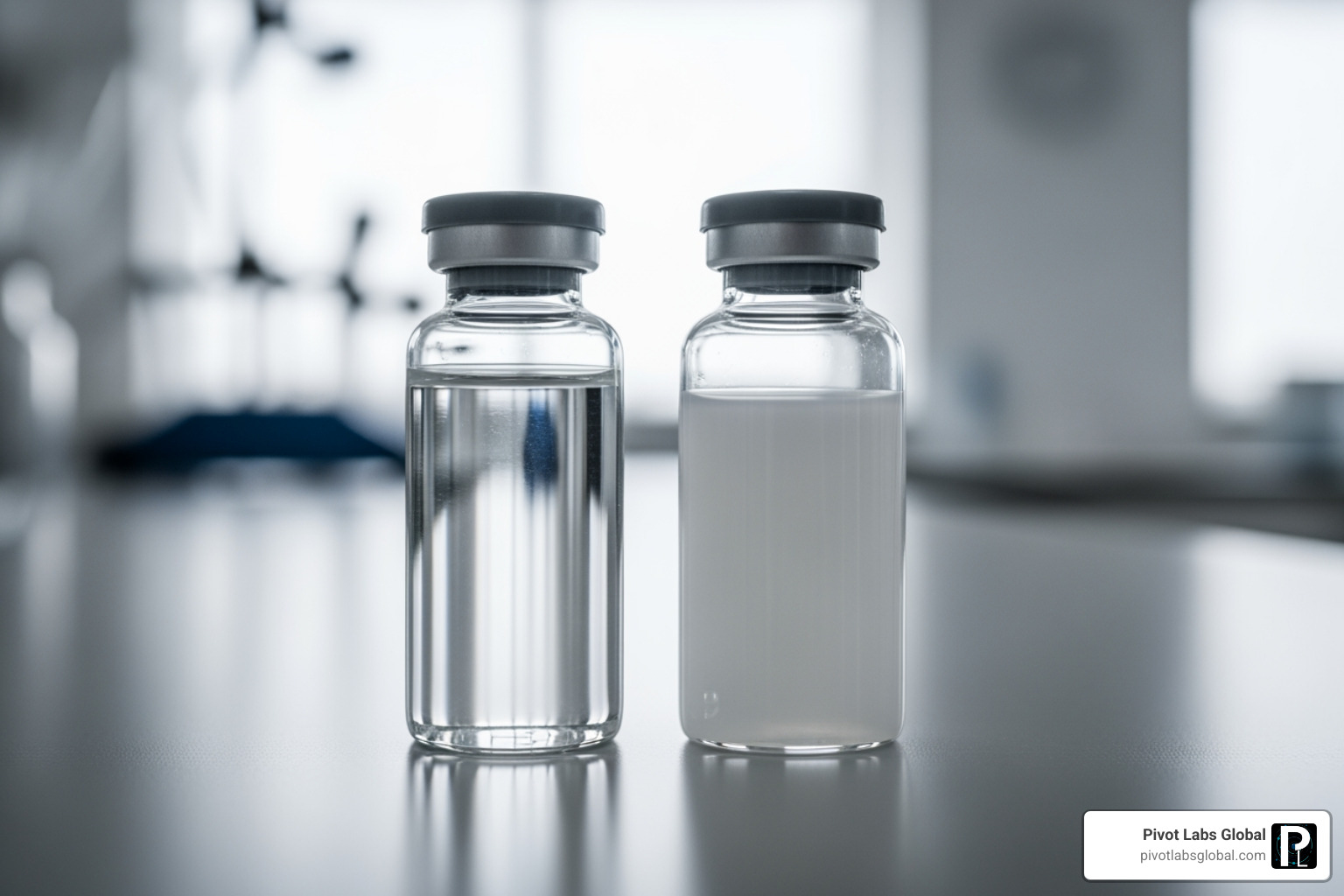
- Cloudiness or Haziness: The solution should be crystal clear.
- Discoloration: Any unusual color change can signal a problem.
- Particulates: Look for any floating specks or sediment.
If you observe any of these signs, discard the solution. The best prevention is starting with high-purity materials. Pivot Labs Global guarantees 99% purity, backed by 3rd party lab testing, which significantly reduces contamination risks from the start. Learn more about our quality control in The Purity Check: Demystifying Peptide Lab Testing. Your results depend on the purity of your materials.
Conclusion: Ensuring Purity and Potency in Your Research
In the intricate world of peptide research, every decision, no matter how seemingly small, carries significant weight. The choice between sterile water or bacteriostatic water for peptides is undoubtedly one of these pivotal decisions. We’ve seen that while sterile water has its niche for immediate, single-use applications, bacteriostatic water emerges as the clear frontrunner for the vast majority of our multi-dose peptide reconstitution needs. Its benzyl alcohol preservative offers invaluable protection against bacterial contamination, extending peptide stability and ensuring the consistency and reliability of our research.
At Pivot Labs Global, we understand that the success of your scientific endeavors hinges on the quality of your materials. That’s why we’re committed to providing research peptides with 99% purity, rigorously verified through comprehensive 3rd party lab testing for purity, sterility, endotoxins, and heavy metals. When you choose Pivot Labs Global, you’re not just purchasing a product; you’re investing in a partnership built on trust, quality, and unwavering support for your research.
By making informed choices about your solvents, employing meticulous reconstitution techniques, and adhering to proper storage protocols, you empower your research with the highest standards of purity and potency. We encourage you to dig deeper into our offerings and find how our commitment to excellence can lift your scientific pursuits. Explore our Analytical Testing Solutions to learn more about the rigorous standards that underpin every product we provide.