
Blog
Don’t Wait! How to Get Your Peptides Delivered Fast

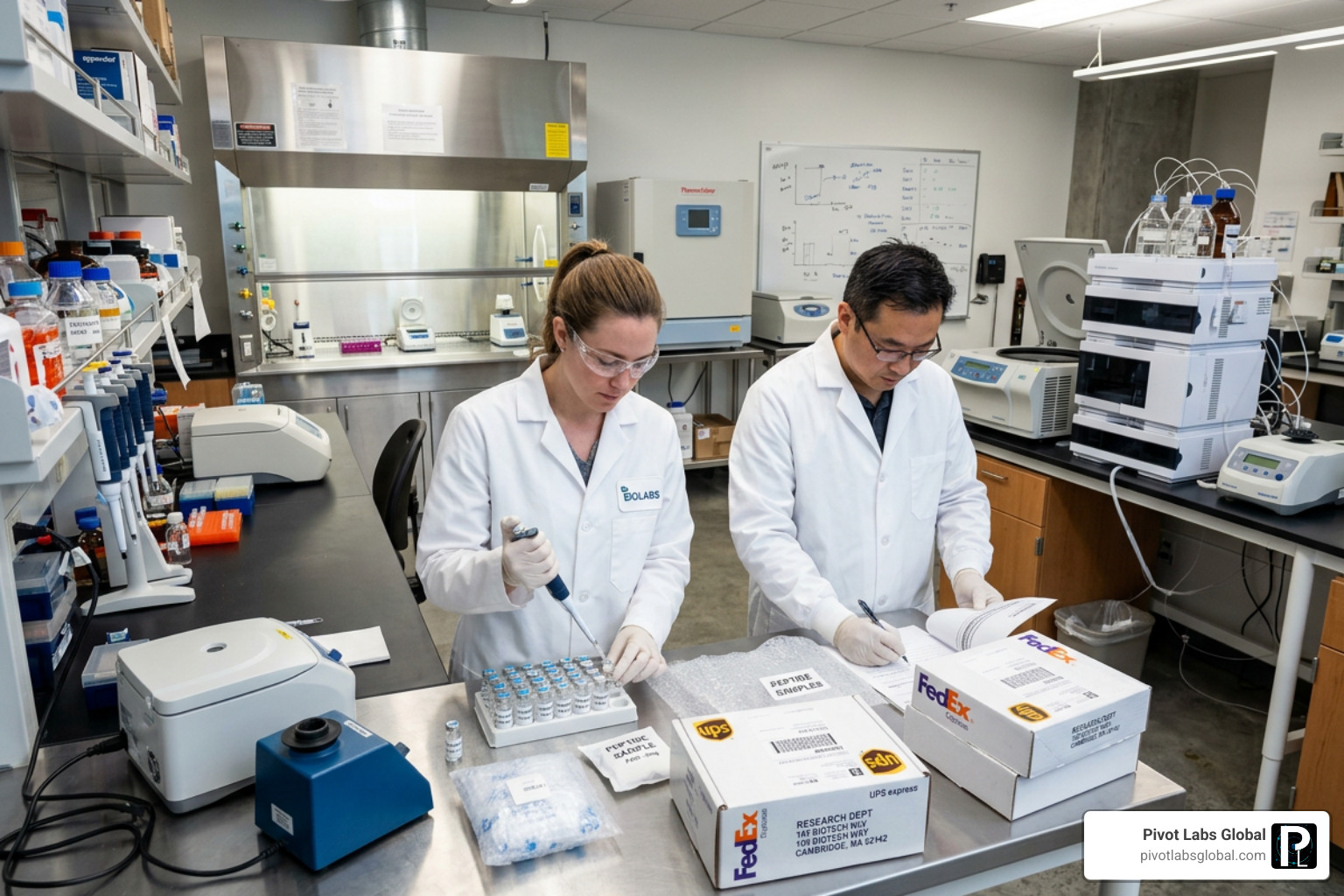
Why Fast Peptide Delivery Matters for Researchers Right Now
Fast peptide delivery refers to both rapid synthesis turnaround times and quick physical shipping of research peptides to your lab. Here’s a quick comparison of your main options:
| Delivery Option | Synthesis Time | Transit Time | Best For |
|---|---|---|---|
| Overnight synthesis | <1 day (<10mer peptides) | 1-2 days express | Urgent short-sequence work |
| Crude peptide order | 3-5 days | 1-2 days express | Standard research needs |
| Purified peptide order | 5-10 days | 1-2 days express | High-purity requirements |
| Standard shipping | Varies | 3-5 days | Non-urgent projects |
Time is one of the most valuable resources in research. A delayed peptide order can stall an entire experiment, push back deadlines, and add unexpected costs.
The global peptide drug market is already worth an estimated $15 billion annually in the U.S. alone. With over 100 peptide pharmaceuticals currently on the market, demand for fast, reliable peptide supply has never been higher.
Yet many researchers still struggle with the same core problems:
- Long synthesis lead times
- Inconsistent purity on rushed orders
- Poor cold-chain handling during transit
- Unclear regulatory status when ordering internationally
This guide cuts through the noise. It covers the science, logistics, and quality standards behind getting peptides delivered fast — without sacrificing integrity.
I’m Max Shemesh from Pivot Labs, where our team specializes in the research and development of high-quality peptide formulations, including optimizing fast peptide delivery workflows for researchers who can’t afford to wait. Understanding how synthesis speed, shipping logistics, and purity standards intersect is at the core of what we do at Pivot Labs Global.
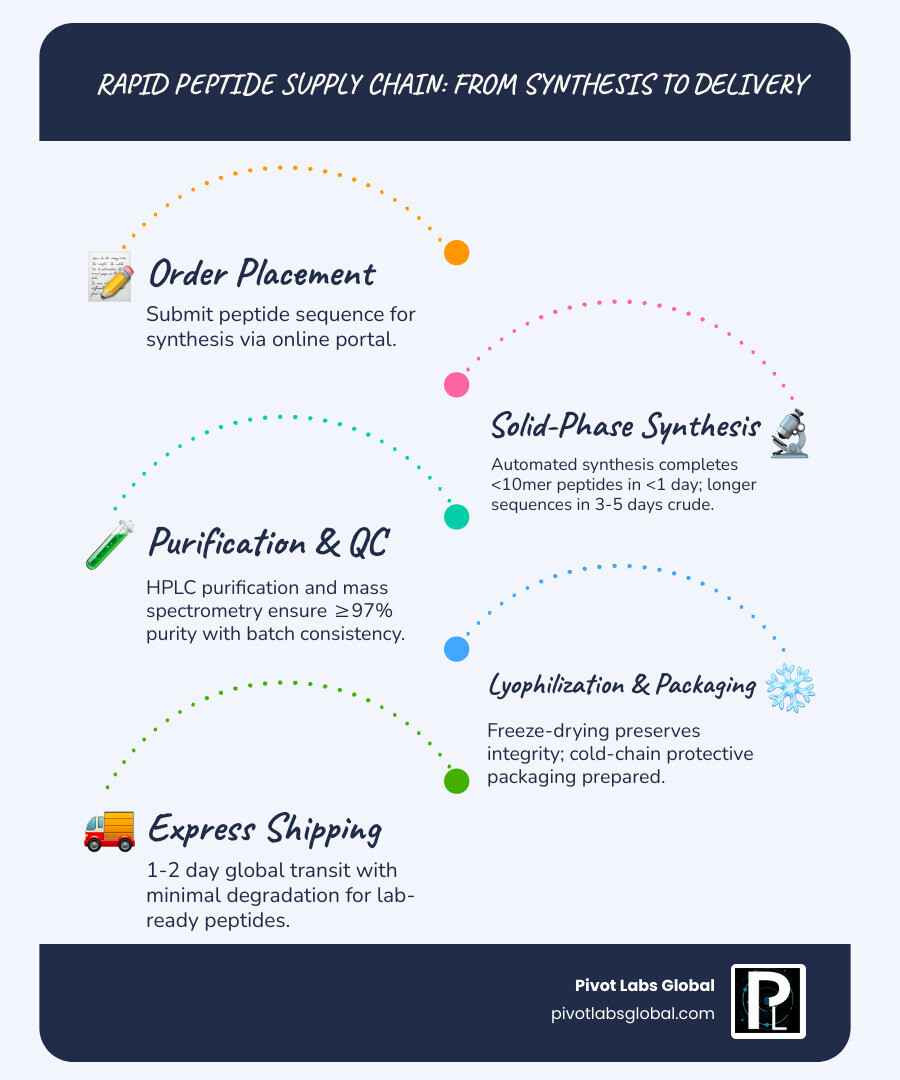
Fast peptide delivery terms to remember:
The Science Behind Fast Peptide Delivery Technologies
While we often think of fast peptide delivery as a logistics problem, it is deeply rooted in pharmaceutical science. Getting a peptide from a vial into a biological system quickly and efficiently requires overcoming the body’s natural defenses. Traditional methods like simple injections are reliable, but new technologies are pushing the boundaries of how fast and effectively these molecules can be absorbed.
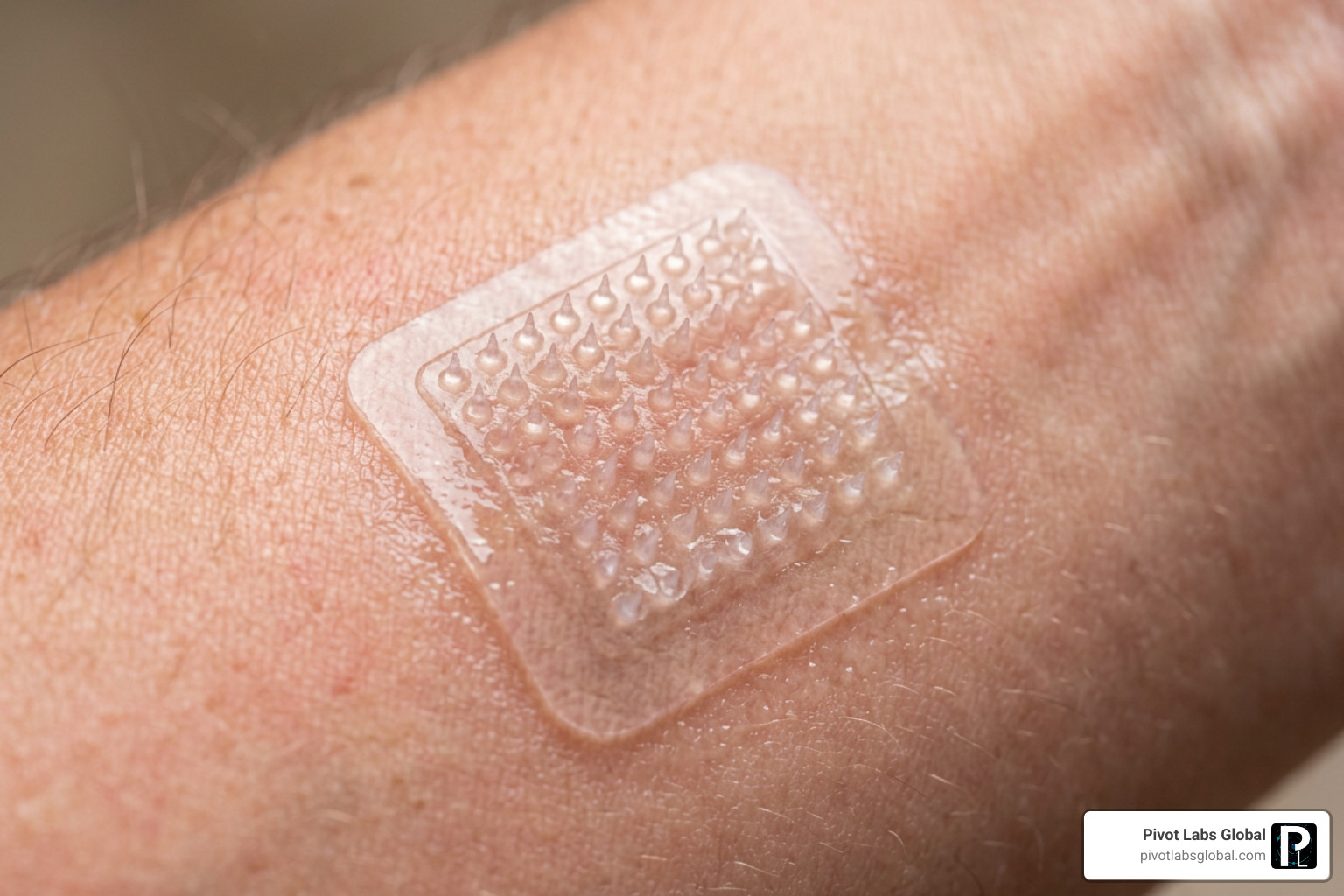
One of the most exciting advancements is the use of dissolving microneedles. These are tiny, micron-sized needles made of biocompatible polymers (like PVP and trehalose) that encapsulate the peptide. When applied to the skin, they bypass the stratum corneum—the skin’s toughest barrier—and dissolve, releasing the peptide directly into the systemic circulation. Research shows that dissolving microneedles can deliver almost an entire dose of low-molecular-weight peptides within just two hours.
Another bioinspired innovation involves suction patches. Inspired by the mechanics of octopus suckers, these patches mechanically stretch the buccal mucosa (the lining of the cheek). This stretching, combined with chemical permeation enhancers, creates temporary pathways for large molecules to pass through. In preclinical studies, these patches improved the bioavailability of certain peptides by up to 100-fold compared to traditional oral tablets.
We also see the rise of nanoparticle formulations. By encapsulating peptides in lipid or polymeric “shells,” researchers can protect them from enzymatic “attack” and guide them toward specific absorption sites. These technologies are critical for achieving high bioavailability—often cited between 85-90% for high-quality research formulations. For more technical details, you can explore the Scientific research on microneedle delivery.
Impact of Molecular Properties on Fast Peptide Delivery
Not all peptides are created equal when it comes to speed. The physical and chemical properties of a sequence dictate how it behaves during both synthesis and delivery.
- Molecular Weight: Size matters. Smaller peptides, typically those consisting of 8–10 amino acids (often called 10mers), are the easiest to synthesize quickly and deliver across biological membranes. Larger peptides (>20 amino acids) often face “traffic jams” when trying to penetrate tissues.
- pH Stability: Most peptides are most stable near a neutral pH (6.5–7.5). If a delivery system or the environment (like the stomach) is too acidic, the peptide can denature or degrade before it ever reaches its target.
- Purity Standards: Speed should never come at the cost of quality. Reliable fast peptide delivery relies on rigorous testing. We look for HPLC (High-Performance Liquid Chromatography) to verify purity and Mass Spectrometry to confirm molecular weight accuracy.
- Hydrophilicity: Peptides that love water can sometimes absorb moisture from the air during the shipping process, which can lead to degradation. This is why proper sealing and desiccants are non-negotiable.
Best Practices for Maintaining Integrity During Fast Peptide Delivery
Even the fastest shipping in the world won’t help if the peptide arrives “dead on arrival.” Maintaining the “cold chain” and structural integrity is a science in itself.
- Lyophilization: This is the process of freeze-drying the peptide into a stable powder. In this state, peptides are much more resistant to temperature fluctuations during express transit.
- Cold Chain Logistics: For many sensitive sequences, shipping on dry ice or with specialized cold packs is essential. Express transit (1-2 days) minimizes the time the peptide spends in a non-controlled environment.
- Batch Consistency: High-quality suppliers maintain a 97% success rate for batch consistency. This ensures that the peptide you receive today behaves exactly like the one you received last month.
- Storage Protocols: Once it arrives, the clock is still ticking. We recommend storing lyophilized powder at -20°C for long-term stability (up to 4 years). Once reconstituted into a liquid, peptides should generally be used within 3-8 weeks and kept at 2-8°C.
Challenges in Traditional Administration Routes
Why are we working so hard on these new delivery technologies? Because traditional routes are full of “potholes.”
The most common hurdle is oral proteolysis. When you swallow a peptide, it enters the stomach, which is a literal acid bath (pH 1.5–3.5). Enzymes like pepsin are designed specifically to break down proteins into their amino acid building blocks. For a therapeutic peptide, this means it gets destroyed before it can be absorbed. Conventional oral delivery often results in a dismal 1–2% bioavailability.
Injections remain the “gold standard” for bioavailability because they bypass the gut entirely. However, they have their own drawbacks:
- Patient Compliance: In a clinical setting, many people dislike needles, leading to skipped doses.
- Local Irritation: Repeated injections can cause tissue damage or inflammation at the site.
- Logistical Burden: They often require sterile preparation and careful disposal of sharps.
Transdermal routes (like standard creams) struggle because the skin is designed to keep things out. The stratum corneum is a highly effective barrier against large, hydrophilic molecules like peptides. Without the microneedles or suction patches mentioned earlier, most peptides simply sit on top of the skin. For an in-depth look at these hurdles, check out the Research on oral cavity barriers.
Accelerating Research with Rapid Synthesis and Shipping
In the modern lab, “fast” is a relative term. To stay competitive, synthesis services have optimized their workflows to provide results in days rather than weeks.
| Peptide Type | Synthesis Timeline | Technology Used |
|---|---|---|
| Short Peptides (<10mer) | Overnight / 24 Hours | Automated Solid-Phase Synthesis |
| Crude Peptides | 3 – 5 Days | High-Throughput SPPS |
| Purified Peptides (>95%) | 5 – 10 Days | Preparative HPLC + Lyophilization |
| Peptide Libraries | 1 – 2 Weeks | Parallel Synthesis Blocks |
Solid-phase peptide synthesis (SPPS) is the engine behind this speed. Developed in the 1950s, it allows amino acids to be added one by one to a solid resin support. This process is now highly automated, allowing for rapid “coupling” and “deprotection” steps.
Newer techniques like aerosol jet printing are even being used to manufacture microneedle arrays with incredible precision and speed. These manufacturing advances, combined with competitive pricing (sometimes as low as $2 per amino acid), have made advanced research accessible to more labs than ever before.
Logistics and Handling for Fast Peptide Delivery
The final leg of the journey is often the most critical. Fast peptide delivery requires a logistics partner that understands the fragility of the cargo.
- Transit Time: Express delivery should ideally take 1-2 days. Statistics show that bioavailability impact is minimal when transit is kept under 48 hours, provided the packaging is sufficient.
- Protective Packaging: Vials should be secured in shock-absorbent containers to prevent micro-fractures in the glass, which could lead to contamination.
- Global Logistics: While we focus on US-based research, domestic same-day shipping is the gold standard for avoiding the “weekend delay” where packages sit in a sorting facility without temperature control.
Regulatory Compliance and Real-World Applications
Peptides aren’t just for the lab; they are solving real-world problems. From muscle growth and wound healing to cutting-edge HIV treatments and vaccine development, the applications are vast.
For example, antimicrobial peptides are being researched for ophthalmic (eye) health, while cell-penetrating peptides are helping deliver neuroprotective agents to the brain. In metabolic health, GLP-1 analogues have revolutionized weight management and diabetes care.
However, with great power comes the need for great oversight. In the United States, research peptides are strictly for laboratory use and are not intended for human consumption. It is the researcher’s responsibility to ensure they are compliant with local laws. For our neighbors to the north, you can find specific Canadian government guidelines regarding the handling and import of research chemicals.
Reliable suppliers provide a Certificate of Analysis (CofA), NMR data, and MSDS for every lot. This documentation isn’t just “paperwork”—it’s your guarantee that the substance in the vial is exactly what you ordered.
Frequently Asked Questions about Fast Peptide Delivery
How does molecular weight affect delivery speed?
Molecular weight (MW) is a primary factor in how quickly a peptide can permeate biological barriers. Generally, peptides under 1,000 Daltons (Da) move much faster through tissues. As MW increases, the “effective” delivery speed slows down because the molecules are more likely to get trapped in the mucus layer or fail to pass through tight junctions between cells.
What are the benefits of dissolving microneedles over injections?
Dissolving microneedles are virtually painless and minimally invasive. Unlike traditional injections, they don’t require “sharps” disposal (since the needles dissolve) and they can be designed for controlled, sustained release. They also eliminate the risk of needle-stick injuries, making them a safer alternative in many research environments.
Is overnight synthesis available for all peptide lengths?
No. Overnight synthesis is typically reserved for “short” sequences, usually 10 amino acids or fewer (<10mer). Longer sequences require more coupling cycles and more extensive purification, which naturally extends the timeline to 5-10 days.
Conclusion
In the world of biotechnology, your research is only as fast as your slowest link. Fast peptide delivery is the bridge between a great hypothesis and a groundbreaking discovery. By leveraging advanced synthesis techniques like SPPS and innovative delivery systems like microneedles, we can push the boundaries of what’s possible.
At Pivot Labs Global, we understand that you need more than just a supplier—you need a partner who values your time as much as you do. That’s why we guarantee 99% purity on our products, backed by comprehensive 3rd party lab testing for sterility, endotoxins, and heavy metals. When you need to move fast, we offer same-day shipping on all US orders to ensure your project never misses a beat.
Your future breakthroughs are waiting. Don’t let a slow supply chain hold them back.