
Blog
In Depth Guide to Research Peptides

Understanding Research Peptides: A Scientific Revolution in Progress
Research peptides are short chains of amino acids (typically 2-100 amino acids long) used exclusively for laboratory and scientific investigation, not for human consumption. These molecules serve as essential tools for drug findy, disease research, and understanding biological processes.
Quick Overview: What You Need to Know About Research Peptides
- Definition: Short amino acid chains (2-100 units) that function as biological messengers
- Primary Use: Laboratory research, drug development, and scientific studies only
- Key Difference from Proteins: Shorter length (peptides 50)
- Major Applications: Diabetes research, cancer studies, Alzheimer’s investigation, pain management development
- Regulatory Status: “For Research Use Only” (RUO) – not approved for human consumption
- Critical Quality Factor: Purity levels (ideally 99%+) verified by third-party testing
- Market Growth: Global peptide therapeutics market projected to grow from $45.9B (2022) to $91.6B (2030)
The world of research peptides has exploded in recent years. Since 2000, approximately 30 peptide drugs have received approval for conditions ranging from diabetes and erectile dysfunction to prostate cancer and osteoporosis. Dozens more are currently in clinical trials, representing a renaissance in peptide-based medicine.
Dr. Jaw-Kang Chang, a pioneer who synthesized his first peptide (TRH) in 1969, once said: “I am old faithful. I will continue making peptides until I die.” His early work contributed directly to the findy of neuropeptides in the pituitary gland—a breakthrough that opened entirely new avenues of biological research.
Today’s research peptides serve as precision tools for scientists investigating everything from Alzheimer’s disease to novel cancer treatments. They offer unique advantages over traditional small molecule drugs: higher specificity, lower toxicity, and predictable metabolism into recyclable amino acids.
But here’s the challenge: not all research peptides are created equal. Purity, sterility, and third-party verification separate legitimate research-grade peptides from questionable products that can compromise experimental results or pose safety risks.
This guide will walk you through everything you need to know about research peptides—from basic science and synthesis methods to therapeutic applications, quality considerations, and regulatory aspects. Whether you’re a researcher sourcing peptides for your lab or simply curious about this rapidly evolving field, you’ll find clear, evidence-based information here.
I’m Max Shemesh from Pivot Labs Global’s Peptide Innovation & Research Team, where we’ve spent years developing high-purity research peptides that meet rigorous quality standards for scientific investigation. Our work focuses on ensuring researchers have access to reliable, well-characterized peptides that produce reproducible experimental results.

What Are Peptides and How Are They Made?
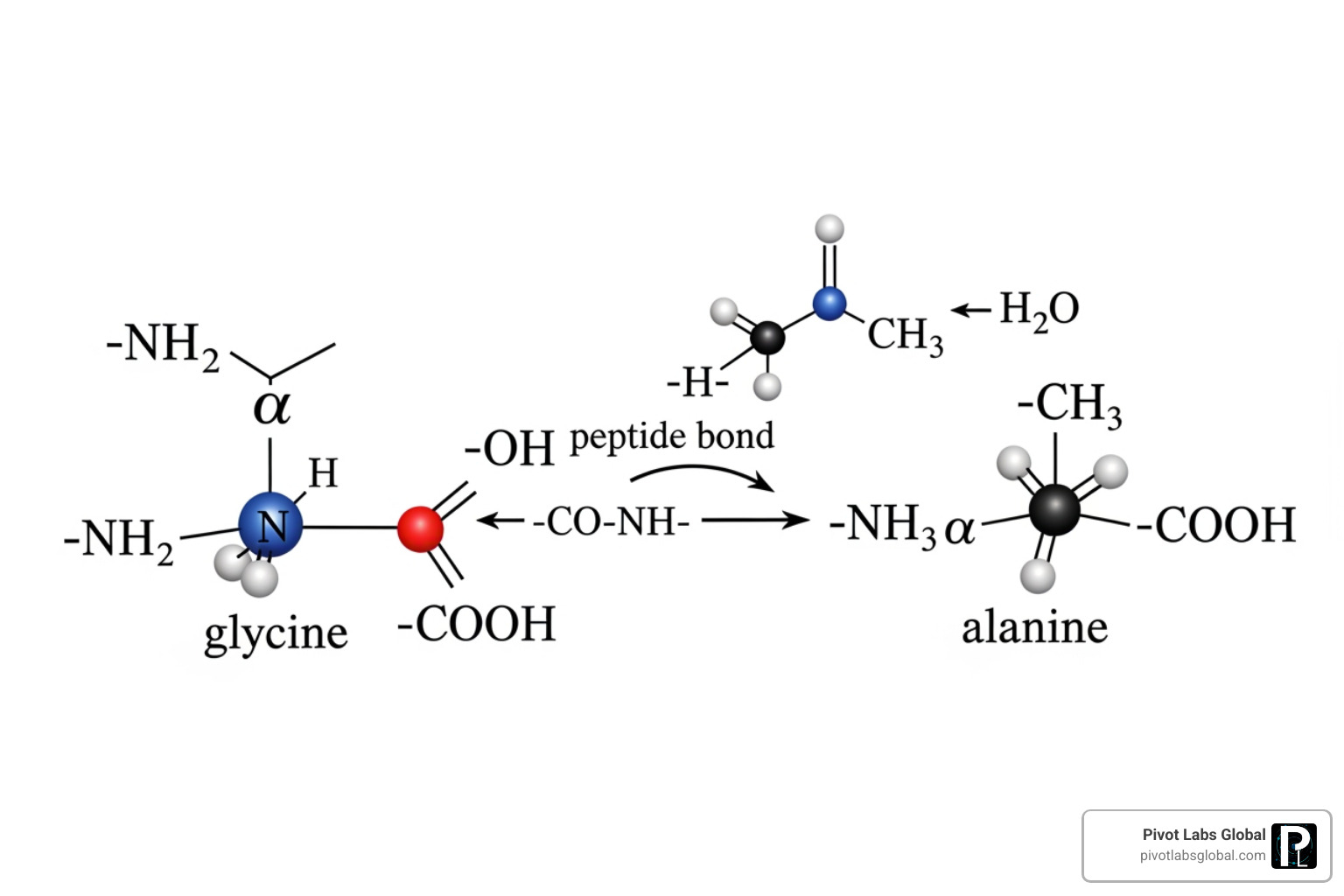
At their core, peptides are fascinating molecular chains. Imagine individual Lego bricks as amino acids. When these bricks link together, they form a chain. If the chain is short, it’s a peptide. If it’s very long and folds into a complex 3D structure, it’s a protein.
Amino acids are the fundamental building blocks of life, forming the proteins in our bodies. There are 20 common amino acids that can join in countless combinations, creating an immense variety of peptides and proteins. The connection between two amino acids is called a peptide bond. When multiple amino acids are linked, they form a polymer chain. Chains with more than twenty amino acids are often called polypeptides, and those exceeding one hundred are typically classified as proteins.
In the body, peptides act as crucial biological messengers, influencing everything from hormone regulation and neurotransmission to immune response and digestion. They can be formed when larger proteins break down or can be synthesized directly from amino acids sourced from our diet.
Peptides vs. Proteins: A Matter of Size and Function
While the terms “peptide” and “protein” are often used interchangeably, the key differentiator lies in their length and, consequently, their structural complexity and functional roles. As we mentioned, our intro defines research peptides as 2-100 amino acids long, while proteins are generally over 100 amino acids.
This size difference isn’t just academic; it profoundly impacts their properties. Proteins, with their extensive amino acid chains, fold into intricate three-dimensional structures essential for complex biological functions like enzyme catalysis, structural support (e.g., collagen), and oxygen transport (e.g., hemoglobin). Peptides, being shorter, tend to have simpler structures but are incredibly versatile. They often act as signaling molecules, communicating between cells and tissues, or as precursors to larger proteins.
Here’s a quick comparison:
| Feature | Peptides | Proteins |
|---|---|---|
| Size | Short chains, typically 2-100 amino acids | Long chains, typically >100 amino acids |
| Structure | Simpler, may or may not have stable 3D folds | Complex, well-defined 3D structures |
| Stability | Generally less stable, more susceptible to degradation | More stable, but can be denatured by extreme conditions |
| Function | Signaling molecules (hormones, neurotransmitters), building blocks, antimicrobial agents | Enzymes, structural components, transport, immune response, cell signaling |
The Science of Modern Peptide Synthesis
The ability to create specific research peptides in the lab has revolutionized biological and medical research. The cornerstone of modern peptide synthesis is Solid-Phase Peptide Synthesis (SPPS), pioneered by R. Bruce Merrifield in the 1960s. This method involves attaching the first amino acid to an insoluble resin bead, then sequentially adding other amino acids, one by one, to build the desired peptide chain.
SPPS is highly efficient because excess reagents and byproducts can be washed away at each step, simplifying purification. Recent advancements, such as microwave-assisted SPPS, have further accelerated the synthesis process and improved the quality of complex peptides, even “difficult sequences” that were once challenging to produce.
A crucial aspect of peptide synthesis involves the use of amino acid derivatives and protecting groups. These chemical modifications ensure that amino acids react only at the desired sites, preventing unwanted side reactions and ensuring the correct sequence is formed. Special building blocks, including non-natural amino amino acids, are also incorporated to improve peptide stability, cell permeability, and overall therapeutic potential. The field continues to evolve, with ongoing research into new methodologies and applications. As a scientific community, we are constantly pushing the boundaries of what’s possible in peptide drug findy. To learn more about the evolving landscape, we recommend exploring resources like The current state of peptide drug discovery.
The Critical Role of Research Peptides in Science
Research peptides are indispensable tools across various scientific disciplines. In drug findy, they serve as starting points for developing new therapeutics, helping us identify and validate novel drug targets. By studying how specific peptides interact with cellular receptors or enzymes, researchers can uncover potential pathways for disease intervention.
For example, peptides are extensively used in biomarker research to identify molecules that indicate disease presence or progression. They also play a significant role in diagnostic development, forming the basis for assays that detect specific conditions. In cell culture studies, research peptides are used to modulate cellular behavior, investigate signaling pathways, and understand cell-cell interactions.
Key Advantages of Using Peptides in Research
Why do scientists increasingly turn to research peptides? Their inherent biological nature gives them several distinct advantages:
- High Specificity: Peptides often bind to their targets with exquisite precision, mimicking natural biological ligands. This specificity can lead to fewer off-target effects and a cleaner pharmacological profile, making them excellent tools for probing specific biological pathways.
- High Potency: Due to their precise interaction with biological targets, many peptides can exert significant effects at very low concentrations. This high potency is highly desirable in both research and therapeutic applications.
- Low Toxicity: As natural components of the body, peptides typically have a favorable safety profile. When they break down, they degrade into recyclable amino acids, which the body can reuse, reducing the accumulation of toxic metabolites.
- Predictable Metabolism: While peptides can be susceptible to enzymatic degradation, their breakdown pathways are generally well-understood. This allows researchers to design modifications that improve stability and predict their behavior in biological systems.
- Fewer Off-Target Effects: Compared to many small molecule drugs that can interact with multiple targets, peptides’ high specificity often translates to a reduced likelihood of unintended interactions, simplifying data interpretation in research.
Sourcing Research Peptides: Catalog and Custom Solutions
When researchers need research peptides, they typically have two main avenues for sourcing them: catalog peptides and custom peptides. Both options serve distinct needs within the scientific community.
Catalog peptides are pre-made, readily available peptides with fixed sequences and prices. They are often common, well-characterized peptides that are frequently used in various research applications, such as those in Alzheimer’s, diabetes, and cancer research. The primary advantage of catalog peptides is convenience and rapid access. If your experiment calls for a standard peptide, a catalog item can be quickly shipped, accelerating your research timeline.
Custom peptides, on the other hand, are tailor-made to a researcher’s exact specifications. This means you can specify the precise amino acid sequence, length, modifications (e.g., phosphorylation, biotinylation, cyclization), and purity levels required for your unique study. Custom synthesis is ideal for novel research projects, structure-activity relationship studies, or when a specific modified peptide is not commercially available. While they require more lead time and typically cost more than catalog options, custom peptides offer unparalleled flexibility and precision for specialized applications.
Choosing between the two depends on your research needs. For routine experiments or initial screening, catalog peptides offer a quick and cost-effective solution. For groundbreaking studies requiring unique molecular tools, custom peptides are the way to go.
At Pivot Labs Global, we understand the critical importance of quality for both catalog and custom research peptides. That’s why we guarantee 99% purity on our research peptides, backed by comprehensive 3rd party lab testing for purity, sterility, endotoxins, and heavy metals. Plus, we offer same-day shipping on all US orders from our facilities in Miami, FL, ensuring your research progresses without unnecessary delays. You can explore our full range of research peptides and services on our dedicated page: Pivot Labs Global’s extensive portfolio of research peptides.
From Bench to Bedside: The Therapeutic Promise of Peptides
The journey of research peptides from laboratory curiosities to life-saving medications is a testament to their immense therapeutic potential. The global peptide drug market is experiencing robust growth, projected to expand from approximately USD 45.9 billion in 2022 to USD 91.6 billion by 2030, demonstrating a significant compound annual growth rate (CAGR) of 9.0%. This growth reflects the increasing recognition of peptides as powerful therapeutic agents across a wide range of conditions.
Peptides are making significant strides in various therapeutic areas, including:
- Metabolic Disorders: Peptides are vital in managing conditions like diabetes and obesity, with drugs like Semaglutide leading the way.
- Oncology: Peptide-based therapeutics are being developed for cancer diagnosis, targeted drug delivery, and immunotherapy.
- Pain Management: Peptides offer novel approaches to chronic pain, often with fewer side effects than traditional opioids.
- Hormonal Imbalances: Many peptide drugs mimic or modulate natural hormones to treat endocrine disorders.
- Infectious Diseases: Antimicrobial peptides (AMPs) are a promising class of agents against antibiotic-resistant bacteria and viruses.
Why Peptides are Superior Drug Candidates to Small Molecules
Compared to traditional small molecule drugs, peptides often present compelling advantages as therapeutic candidates:
- Targeting “Undruggable” Proteins: Many disease-causing proteins have flat, complex surfaces that are difficult for small molecules to bind to with high affinity and specificity. Peptides, with their larger and more flexible structures, can often successfully engage these challenging targets, effectively “undrugging” them.
- Modulating Protein-Protein Interactions (PPIs): PPIs are fundamental to almost all biological processes and are implicated in numerous diseases. Small molecules typically struggle to disrupt these large interaction surfaces. Peptides, being larger than small molecules but smaller than proteins, are ideally suited to mimic or inhibit PPIs, making them powerful tools for therapeutic intervention.
- Lower Immunogenicity than Large Proteins: While large protein therapeutics (like antibodies) can sometimes trigger an immune response, peptides generally have lower immunogenicity due to their smaller size and often rapid clearance. This reduces the risk of adverse reactions and allows for repeated dosing.
- Favorable Safety Profile: As mentioned earlier, peptides typically degrade into natural amino acids, which are readily metabolized by the body. This often translates to fewer toxic side effects and a better safety profile compared to synthetic small molecules. Their high specificity also contributes to reduced off-target activity.
List of Successful Peptide-Based Drugs
The success of peptide research is evident in the growing number of approved peptide drugs. Here are some notable examples:
- Insulin (Diabetes): Finded over a century ago, insulin was the first peptide therapeutic and remains a cornerstone in diabetes management. Modern insulin production relies on recombinant DNA technology, making it widely accessible. For more on the historical context, see Therapeutic peptides: historical perspectives.
- Semaglutide (Diabetes/Weight Loss): Marketed as Ozempic and Wegovy, semaglutide is a GLP-1 receptor agonist that has revolutionized the treatment of type 2 diabetes and obesity. It’s a prime example of a peptide engineered for sustained therapeutic activity.
- Leuprolide (Prostate Cancer): This synthetic analogue of gonadotropin-releasing hormone (GnRH) is used to treat prostate cancer, endometriosis, and precocious puberty by suppressing hormone production.
- Ziconotide (Chronic Pain): Derived from the venom of a cone snail, ziconotide is a potent, non-opioid painkiller administered intrathecally for severe chronic pain, with a painkilling potency a thousand times greater than morphine.
- Enfuvirtide (HIV): This fusion inhibitor peptide was one of the first drugs to target HIV entry into cells, providing a crucial treatment option for patients with resistant forms of the virus.
- Teduglutide (Short Bowel Syndrome): A GLP-2 analog, teduglutide helps improve intestinal absorption and reduces the need for parenteral support in patients with short bowel syndrome.
- Liraglutide (Diabetes/Weight Loss): Another GLP-1 receptor agonist, liraglutide (Victoza, Saxenda) is used for type 2 diabetes and chronic weight management.
- Octreotide (Acromegaly, Neuroendocrine Tumors): A synthetic somatostatin analog, octreotide is used to treat conditions caused by excess hormone production, such as acromegaly and certain neuroendocrine tumors.
- Teriparatide (Osteoporosis): This recombinant form of parathyroid hormone is used to stimulate bone formation in patients with severe osteoporosis.
- Bremelanotide (Erectile Dysfunction): An injectable melanocortin receptor agonist, bremelanotide treats hypoactive sexual desire disorder in premenopausal women.
These examples highlight the diverse applications and significant impact of peptide therapeutics in modern medicine.
Navigating the Future of Peptide Development
The field of research peptides is dynamic, with scientists constantly innovating to improve their therapeutic utility. Key areas of focus include improving drug delivery, extending their activity in the body, and leveraging advanced design techniques.
Overcoming Problems in Peptide Research and Drug Development
While peptides offer many advantages, they also present challenges that researchers are actively addressing:
- Poor Membrane Permeability: The size and hydrophilic nature of many peptides make it difficult for them to cross cell membranes, limiting their ability to reach intracellular targets and making oral administration challenging.
- Enzymatic Degradation: Peptides are susceptible to breakdown by proteases in the body, which can lead to a short half-life and necessitate frequent dosing or alternative delivery methods.
- Manufacturing Scale-Up: Producing large quantities of complex, modified peptides can be technically challenging and expensive compared to small molecule synthesis.
- Cost of Synthesis: The intricate process of peptide synthesis, especially for custom or highly modified peptides, can lead to higher production costs.
Researchers are tackling these issues through various strategies, including:
- Oral Delivery Methods: Developing formulations that protect peptides from degradation in the gastrointestinal tract and improve their absorption, such as oral semaglutide.
- Extending Half-Life: Modifying peptides through techniques like PEGylation (attaching polyethylene glycol chains) or fusing them to albumin or antibodies to increase their circulation time in the bloodstream.
- Cell-Penetrating Peptides (CPPs): Designing peptides that can actively transport other molecules, including other peptides, across cell membranes into the cytoplasm.
- Computational Peptide Design: Utilizing advanced algorithms and artificial intelligence to predict optimal peptide sequences and modifications for specific targets, improving binding affinity, stability, and cell permeability.
Regulatory and Safety Aspects of Using Research Peptides
It’s crucial to understand the regulatory landscape surrounding research peptides, especially in the United States. All research peptides sold by reputable suppliers, including Pivot Labs Global, are designated “For Research Use Only” (RUO). This means they are strictly intended for in-vitro laboratory research and scientific investigation.
They are NOT for human consumption, diagnostic use, or therapeutic purposes.
This distinction is not merely a formality; it’s a critical safety and ethical guideline. Products marked RUO have not undergone the rigorous clinical trials and regulatory approvals (e.g., by the FDA) required for human use. Misusing research peptides can lead to unknown side effects, compromised health, and legal repercussions.
Therefore, the importance of purchasing from a trusted supplier that adheres to these guidelines cannot be overstated. We ensure that our research peptides are clearly labeled and sold with the understanding that they are for research purposes only.
Importance of Purity: For any scientific experiment, the purity of your research peptides is paramount. Impurities can lead to inconsistent results, confounding variables, and unreliable data. At Pivot Labs Global, we stand by our 99% purity guaranteed for all our research peptides.
Third-Party Testing: To provide an unbiased verification of quality, we subject our research peptides to comprehensive 3rd party lab testing. This includes analysis for:
- Purity: Ensuring the peptide sequence is correct and free from synthesis byproducts.
- Sterility: Verifying the absence of microbial contamination.
- Endotoxins: Detecting and quantifying bacterial endotoxins, which can interfere with cell-based assays.
- Heavy Metals: Confirming the absence of harmful heavy metal contaminants.
Certificate of Analysis (COA): A Certificate of Analysis (COA) is provided with every batch of our research peptides. This document details the results of our internal and 3rd party lab testing, confirming the identity, purity, and quality of the product you receive. This transparency is vital for researchers to have full confidence in their materials and the integrity of their experimental results.
Frequently Asked Questions
Are research peptides legal to purchase?
Yes, research peptides are legal to purchase in the United States, including Florida, provided they are explicitly designated and used “For Research Use Only” (RUO). This means they are intended solely for laboratory and scientific research and explicitly not for human consumption, medical treatment, or personal use. Reputable suppliers, like Pivot Labs Global, adhere strictly to these regulations, ensuring all products are clearly labeled for research use only. Purchasers are typically required to be over 21 years old and agree to terms and conditions that specify their intent to use the products for legitimate research purposes. It is the responsibility of the researcher to ensure compliance with all local, state, and federal laws regarding their use.
Why is peptide purity so crucial for research?
Peptide purity is absolutely critical for several reasons. In scientific research, even minor impurities can drastically alter experimental outcomes, leading to:
- Inaccurate Results: Contaminants can interfere with a peptide’s intended biological activity, cause non-specific binding, or trigger unintended cellular responses, making it impossible to draw reliable conclusions.
- Poor Reproducibility: If the purity of a peptide varies between batches or suppliers, experiments may not yield consistent results, hindering scientific progress and validation.
- Confounding Variables: Unidentified impurities can act as uncontrolled variables in an experiment, masking the true effects of the peptide being studied or leading to false positives/negatives.
- Safety Concerns in Preclinical Studies: While RUO peptides are not for human use, preclinical in vitro or in vivo animal studies still require high purity to ensure that any observed effects are due to the peptide itself and not contaminants like endotoxins or heavy metals, which can induce inflammatory responses or toxicity.
At Pivot Labs Global, we understand this deeply, which is why we guarantee 99% purity for our research peptides. Our comprehensive 3rd party lab testing for purity, sterility, endotoxins, and heavy metals is designed to eliminate these confounding factors, giving researchers the confidence they need for robust and reproducible results.
What are the most promising areas of peptide research?
The landscape of peptide research is incredibly vast and continues to expand, with several areas showing immense promise:
- Antimicrobial Peptides (AMPs): With the rise of antibiotic-resistant bacteria, AMPs are being extensively researched as a new class of antibiotics. They offer a unique mechanism of action, often disrupting bacterial membranes, making resistance less likely.
- Neurodegenerative Diseases: Peptides are being explored for their potential to cross the blood-brain barrier and target proteins implicated in conditions like Alzheimer’s and Parkinson’s disease, offering hope for novel treatments.
- Personalized Cancer Vaccines: Research peptides are at the forefront of immunotherapy, with studies focusing on designing peptide-based vaccines that stimulate a patient’s immune system to recognize and attack cancer cells. This approach offers the potential for highly specific and personalized cancer treatments.
- Anti-Aging Applications: Beyond their cosmetic use in skincare, peptides are being investigated for their roles in cellular repair, collagen production, and other biological processes linked to aging, potentially leading to interventions that promote healthy aging.
- Metabolic Syndrome and Obesity: The success of GLP-1 receptor agonists (like Semaglutide) has opened doors for further peptide research into diabetes, obesity, and related metabolic disorders, including dual or triple agonists that target multiple pathways.
These exciting areas highlight how research peptides are paving the way for future breakthroughs in medicine and biotechnology.
Conclusion: The Future is Built with Peptides
From their fundamental role as biological messengers to their transformative potential as therapeutic agents, research peptides stand at the forefront of scientific innovation. We’ve explored their intricate structures, the sophisticated methods used to synthesize them, and their critical applications in drug findy, diagnostics, and understanding life’s complex processes.
The journey of peptides, from the early findy of insulin to the cutting-edge development of treatments for cancer, diabetes, and neurodegenerative diseases, underscores their unique advantages: high specificity, potent action, and a favorable safety profile compared to many traditional small molecules. While challenges such as stability and delivery remain, ongoing research into oral formulations, half-life extension, and computational design promises to open up even greater potential.
For any scientific endeavor, the quality of research peptides is non-negotiable. At Pivot Labs Global, we are committed to providing researchers in the United States with research peptides of the highest caliber. Our 99% purity guaranteed, coupled with comprehensive 3rd party lab testing for purity, sterility, endotoxins, and heavy metals, ensures that your experiments are built on a foundation of reliable and consistent materials. And with same-day shipping on all US orders from our Miami, FL facilities, we aim to accelerate your path to findy.
The future of medicine is increasingly being shaped by the precision and versatility of peptides. We are proud to support this scientific revolution by supplying the high-quality research peptides necessary to drive groundbreaking findies.
Explore our catalog of high-purity research peptides and join us in building the future of science, one peptide at a time.