
Blog
Peptide Powerhouses: Where to Find the Best US-Based and Premium Peptides

Why Finding a Reliable Peptide Source Matters for Your Research
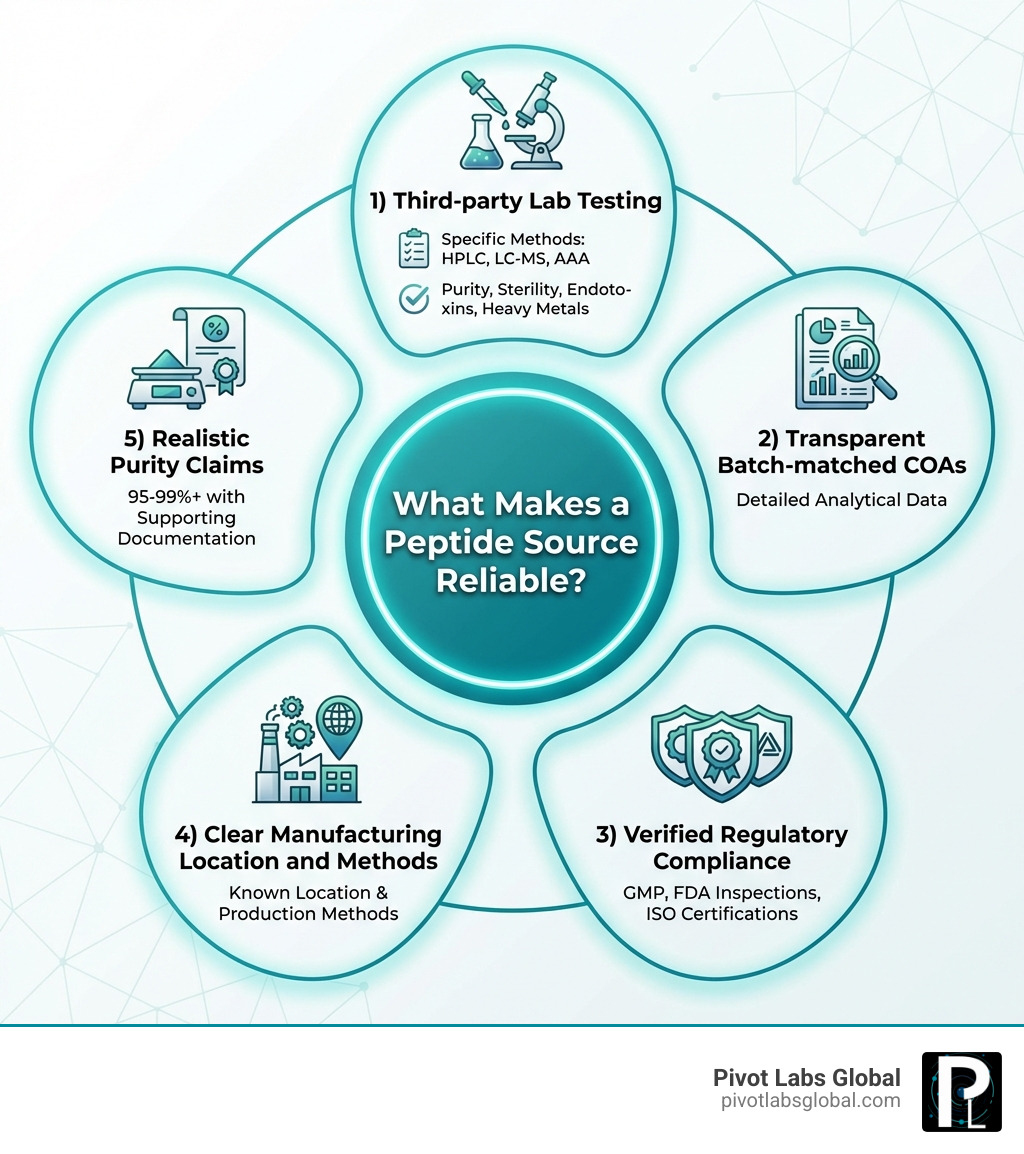
A reliable peptide source is the foundation of successful research—yet many scientists struggle to distinguish between trustworthy suppliers and those making hollow quality claims. Here’s what separates the best peptide suppliers from the rest:
Key Hallmarks of a Reliable Peptide Source:
- Third-party verification – Independent lab testing for purity, sterility, endotoxins, and heavy metals
- Transparent documentation – Batch-matched Certificates of Analysis (COAs) with HPLC and MS data
- Clear regulatory status – FDA inspections, GMP certification, or ISO compliance where applicable
- Manufacturing transparency – Known location and production methods (not a “black box”)
- Realistic purity claims – Typically 95-99%+ with supporting data, never vague “100%” promises
The peptide manufacturing landscape is crowded with suppliers making aggressive quality claims. Over 40 synthetic peptide producers operate at various scales—from research-grade specialty labs to pharma-scale GMP facilities. But not all peptides are created equal.
The stakes are high. Contaminated or low-purity peptides can derail months of research, waste grant funding, and produce unreproducible results. Researchers report common issues like missing COAs, unclear manufacturing locations, and peptides that fail to dissolve or perform as expected.
Custom peptides can contain as much as 10-45% residual trifluoroacetic acid (TFA), while net peptide content—the actual weight of the peptide versus water, salts, and counterions—typically ranges from 50-80% of the total powder weight. Understanding these technical details helps you evaluate what you’re actually receiving.
Whether you need catalog peptides for routine experiments or custom synthesis with specialized modifications, your choice of supplier directly impacts your research quality. Some suppliers have established track records spanning decades, with multiple FDA inspections and hundreds of thousands of peptides delivered—but transparency in testing and documentation matters more than years in business.
As Max Shemesh from Pivot Labs’ Peptide Innovation & Research Team, I’ve spent years evaluating peptide quality standards and developing advanced analytical testing solutions. Finding a reliable peptide source requires understanding what separates rigorous verification from marketing claims—and that’s exactly what this guide will help you steer.
Key Criteria for Choosing a Reliable Peptide Source
When starting on peptide research, selecting the right supplier is paramount. It’s not just about getting a peptide; it’s about getting a peptide that performs predictably, consistently, and reliably. At Pivot Labs Global, we understand these critical distinctions. Our evaluation process, and what we recommend you look for, hinges on several core pillars: quality control, regulatory compliance, US-based manufacturing advantages, supply chain security, and responsive customer service.
For US-based researchers, sourcing from manufacturers within the United States offers distinct advantages. Some suppliers proudly manufacture 100% in the USA, emphasizing domestic production for clinical research. This often translates to shorter lead times, easier communication, and adherence to stringent US regulatory standards, such as those set by the FDA. For instance, many reputable suppliers maintain FDA-inspected facilities in the USA. These factors contribute significantly to a more secure and reliable supply chain, minimizing potential delays or quality issues that can arise from international logistics. A strong, transparent local presence can be a game-changer for your research timeline and budget.
Decoding Quality: Purity, Potency, and Net Peptide Content
The terms “purity” and “net peptide content” are often used interchangeably, but understanding their difference is crucial for accurate experimental design. Peptide purity defines the percentage of your target peptide sequence within the total peptide component of your sample. In contrast, net peptide content refers to the actual weight of the peptide component of your sample, distinct from other substances like water, absorbed solvents, counterions (like TFA), and salts. The dry peptide powder we receive often contains these non-peptide elements, meaning the total “gross weight” isn’t entirely active peptide. Typically, the net peptide content ranges from 50-80% of the total peptide weight.
To ensure what you’re paying for is what you’re getting, robust analytical methods are indispensable. High-Performance Liquid Chromatography and Mass Spectrometry are the gold standards for assessing peptide purity and identity. HPLC separates compounds based on their physiochemical properties, allowing us to quantify the percentage of the desired peptide. MS confirms the exact molecular weight, verifying the peptide’s identity. For a deeper dive, Amino Acid Analysis (AAA) can precisely determine the actual net peptide content by quantifying the constituent amino acids.
What kind of impurities should you expect? Even in high-purity peptides, common impurities can include salts, residual solvents, water, and counterions. Deletion sequences (peptides missing one or more amino acids) and truncation sequences (incomplete peptides) can also occur during synthesis. One particularly important impurity is Trifluoroacetic Acid (TFA). While TFA is commonly used in peptide synthesis for cleavage from resins and in HPLC purification, residual TFA can be harmful to biological assays and can interfere with experimental results. This is why we often perform TFA exchange services, replacing it with acetate or HCl to ensure optimal assay performance. For a precise understanding of the chemical makeup of your peptides, we offer detailed analyses.
More info about our Chemical Composition Analysis
The Importance of Third-Party Testing for a Reliable Peptide Source
In research chemicals, trust isn’t given; it’s earned through rigorous, independent verification. That’s why third-party testing is non-negotiable for a truly reliable peptide source. While a supplier can make claims about their quality, an independent laboratory provides unbiased results, confirming those claims with objective data.
At Pivot Labs Global, we pride ourselves on going beyond in-house checks. We guarantee 99% purity, backed by comprehensive third-party lab testing. This isn’t just a marketing slogan; it’s a commitment to your research integrity. Our independent analyses cover critical parameters such as:
- Purity: Verified by HPLC and MS, ensuring the target peptide is the predominant compound.
- Sterility Testing: Crucial for cell culture and in vitro applications, confirming the absence of microbial contamination.
- Endotoxin Levels: Especially important for in vivo studies, as high endotoxin levels can trigger inflammatory responses.
- Heavy Metal Screening: Essential to rule out toxic contaminants that could skew experimental results or pose safety risks.
This level of scrutiny ensures batch-to-batch consistency, meaning that the peptide you receive today will perform identically to the one you ordered last month. This unparalleled verification is what sets truly reliable suppliers apart and helps you avoid costly experimental failures.
Our comprehensive Analytical Testing Solutions
Navigating the Regulatory Landscape
The regulatory status of a peptide supplier can tell you a lot about their commitment to quality and safety. While many research peptides are labeled “For Research Use Only” and are not intended for human consumption, the processes used to manufacture them still matter. For suppliers operating at a larger scale or involved in clinical development, certifications like Good Manufacturing Practice (GMP) are critical. GMP ensures products are consistently produced and controlled according to quality standards. Some suppliers, for example, have track records spanning over 50 years and have passed multiple FDA inspections, demonstrating a long-standing commitment to regulatory excellence. Passing numerous FDA inspections further highlights the importance of this oversight.
Beyond GMP, ISO 9001 certification indicates a robust quality management system, ensuring consistent processes and continuous improvement. Many top-tier suppliers partner with WHO/GMP and ISO 9001:2015-approved manufacturers.
The “Research Use Only” disclaimer is a legal necessity for peptide suppliers. It signifies that the products are strictly for laboratory, research, or analytical purposes and are not approved for human or animal consumption, nor are they intended to diagnose, treat, cure, or prevent any disease. This distinction is vital for researchers to understand and respect, as misuse can have legal and ethical implications. At Pivot Labs Global, we strictly adhere to these guidelines, ensuring all our products are clearly designated for research purposes only. This commitment to legal compliance not only protects our operations but also provides clarity and safeguards for your research endeavors.
Learn more about our advanced lab services
Red Flags to Watch For When Evaluating Suppliers
In your quest for a reliable peptide source, it’s just as important to know what to avoid as what to seek out. The peptide market, unfortunately, has its share of “snake oil salesmen” making aggressive claims without the substance to back them up. Here are some critical red flags to watch for:
- Vague Quality Claims: Beware of suppliers who use generic phrases like “highest quality” or “premium grade” without providing specific analytical data or naming the methods used (e.g., HPLC, MS). If they can’t clearly articulate how they ensure quality, it’s a major warning sign.
- Missing Certificates of Analysis (COAs): Every batch of peptide should come with a detailed COA, outlining its purity, identity, and other relevant analytical data. If a supplier can’t provide this documentation upfront or only offers generalized COAs, proceed with extreme caution.
- Unrealistic Purity Guarantees (e.g., “100%”): Peptides, by their very nature, are complex molecules, and achieving absolute 100% purity is practically impossible due to residual solvents, counterions, and minor byproducts. Claims of “100%” purity are often a sign of misrepresentation. A reliable peptide source will typically offer purities in the 95-99%+ range, backed by verifiable data.
- Unclear Manufacturing Location: Transparency about where peptides are synthesized and processed is a hallmark of trustworthiness. If a supplier is cagey about their manufacturing facilities or location, it could indicate a lack of oversight or adherence to quality standards. For US-based researchers, a clear US manufacturing presence is a significant advantage.
- Insecure Payment Methods: Be wary of suppliers who exclusively request wire transfers or other payment methods that offer no buyer protection. Reputable suppliers will typically offer secure, encrypted payment gateways.
- Lack of Transparency: A general lack of openness—whether it’s about their processes, their testing, their team, or their policies—should raise immediate suspicion. A reliable peptide source will welcome questions and provide thorough answers.
By being vigilant and knowing these red flags, you can significantly reduce the risk of encountering unreliable suppliers and protect the integrity of your valuable research.
Customization and Catalog Options: Matching the Peptide to Your Research
Choosing between catalog and custom peptides is a fundamental decision that depends entirely on your research needs. Think of it like choosing between a ready-made suit and a bespoke one. Both have their place, but one is designed for general fit, while the other is custom to perfection.
| Feature | Standard (Catalog) Peptides | Custom Peptides |
|---|---|---|
| Availability | Readily available, off-the-shelf | Synthesized on demand |
| Speed | Quick access, often same-day or next-day shipping | Longer turnaround times (typically 2-4 weeks) |
| Cost | Generally more cost-effective due to bulk production | Higher cost due to specialized synthesis and labor |
| Customization | Fixed sequences, limited or no modification options | Tailor-made sequences, extensive modification and labeling options |
| Specificity | Suitable for common, well-established research applications | Ideal for unique, complex, or highly specific research projects |
| Modifications | Pre-defined | Virtually any modification possible (e.g., phosphorylation, fluorescent labels) |
| Turnaround Time | Immediate | Project-dependent (2-3 weeks for standard custom, longer for complex) |
Standard Peptides: The Off-the-Shelf Solution
For many research applications, especially those involving well-characterized pathways or routine experiments, standard, or “catalog,” peptides are an excellent choice. These are pre-synthesized peptides with fixed sequences and established purities, offering convenience and quick access.
The main advantages of sourcing catalog peptides are their immediate availability and cost-effectiveness. Since they are produced in larger batches, the economies of scale allow for more competitive pricing. Many suppliers offer an extensive portfolio of catalog peptides, with the capacity to produce them from milligram to kilogram scale, with some catalogs containing over 150 peptides. This makes them ideal for initial screenings, positive controls, or experiments where specific modifications aren’t critical. While readily available, a reliable peptide source for catalog peptides will still provide comprehensive Certificates of Analysis and purity guarantees, just as they would for custom orders.
Custom Peptide Solutions for Specialized Research
When your research digs into novel areas, requires specific post-translational modifications, or demands precise labeling for advanced analytical techniques, custom peptides become indispensable. These tailor-made sequences are manufactured according to your exact specifications, giving you unparalleled control over every aspect of the peptide.
The true power of custom peptides lies in their flexibility. You can specify:
- Unique Sequences: Design peptides that precisely match protein fragments, inhibitors, or other biomolecules relevant to your specific research question.
- Specialized Modifications: Incorporate specific modifications like phosphorylation, glycosylation, or unnatural amino acids to mimic biological processes or improve stability.
- Precise Purity Requirements: Choose the exact purity level needed for your experiment, from crude for initial screenings to >98% for in vivo studies, which often require exceedingly pure peptides to avoid unwanted side reactions.
While custom synthesis requires a bit more patience, the precision it offers can be invaluable. Typical turnaround times for custom peptide synthesis range from 2 to 4 weeks, depending on the length and complexity of the sequence and any modifications. For example, many suppliers report a typical turnaround time of 2-3 weeks for standard custom peptides. This lead time is a small price to pay for a peptide perfectly suited to your project’s unique needs, ensuring optimal experimental outcomes.
Contact us for a custom peptide consultation
Advanced Capabilities and Practical Guidance
Beyond simply synthesizing a peptide, a truly reliable peptide source also offers advanced capabilities to tackle complex research challenges and provides practical guidance for handling these delicate molecules.
Common Modifications, Labeling, and Peptide Libraries
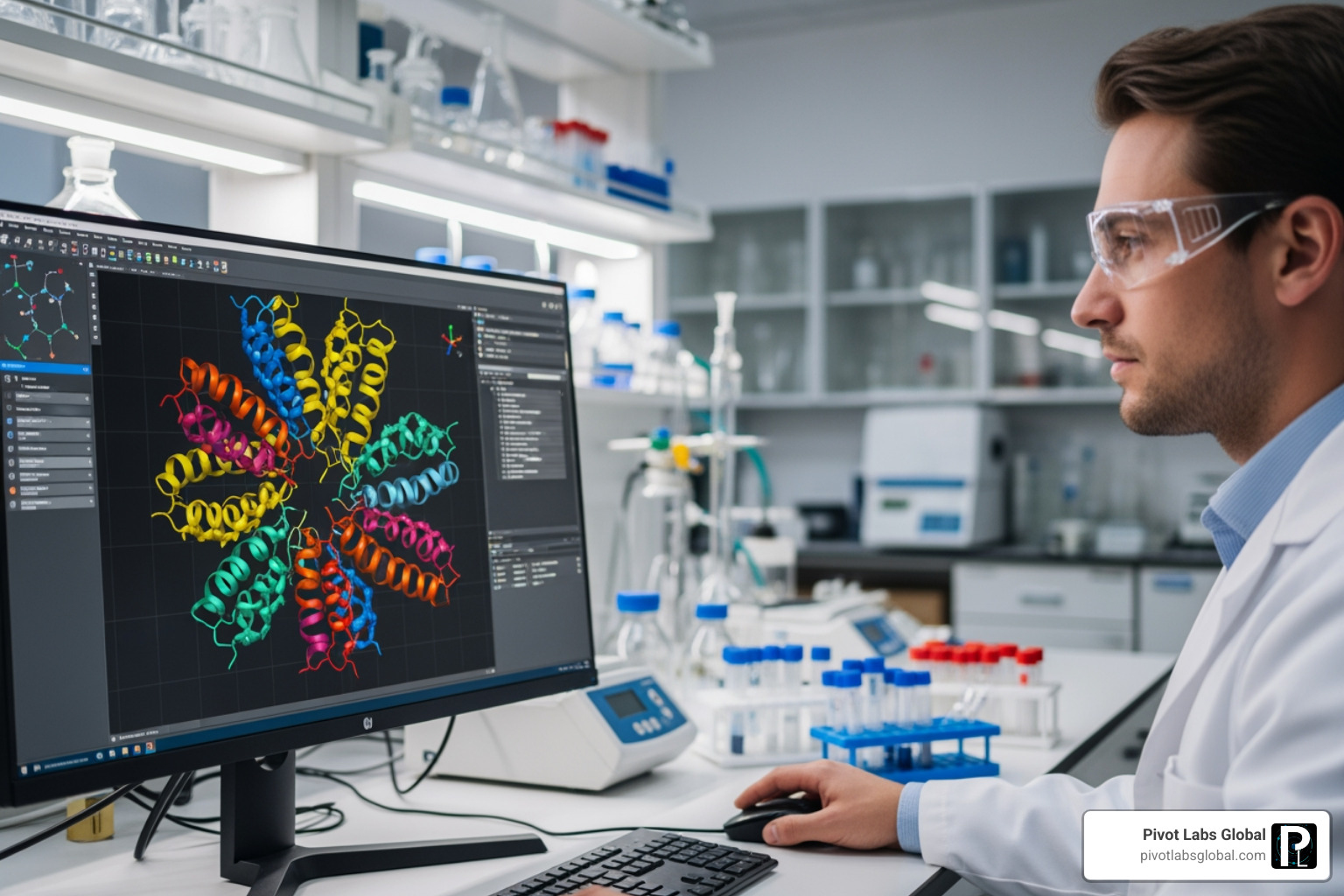
The versatility of peptides in research is greatly expanded by the vast array of modifications and labeling options available. These allow researchers to fine-tune peptide properties, track their movement, or improve their biological activity.
- N-terminal and C-terminal Modifications: Common modifications include N-terminal Acetylation (which mimics the native protein and can increase stability) and C-terminal Amidation (which can prevent enzymatic degradation and alter solubility).
- Post-Translational Modifications (PTMs): To study signaling pathways, peptides can be synthesized with PTMs like Phosphorylation, Methylation, or Glycosylation.
- Fluorescent Labels: For imaging and tracking studies, peptides can be conjugated with various fluorescent dyes (ee.g., Alexa Fluor), allowing visualization in cells or in vivo.
- Isotopic Labeling: For quantitative mass spectrometry applications, peptides can be synthesized with isotopically labeled amino acids (e.g., HeavyPeptide AQUA), providing internal standards for precise quantification of protein expression or modification.
- Peptide Libraries: For high-throughput screening and drug findy, peptide libraries are invaluable. These are collections of numerous peptides, often systematically varied, used to identify binding partners, enzyme substrates, or potential drug candidates. Many suppliers offer peptide libraries for epitope mapping and findy research. Some of the largest manufacturers have delivered hundreds of thousands of custom peptides, including complex sequences up to 200 amino acids, showcasing their broad capabilities.
We recognize the critical role these modifications play in pushing the boundaries of scientific findy.
Learn more about our Custom Peptide Synthesis capabilities
Best Practices for Peptide Storage and Handling
Once you’ve secured your high-quality peptide, proper storage and handling are crucial to maintain its integrity and ensure reproducible results. Peptides are delicate biomolecules, and mishandling can lead to degradation, aggregation, or loss of activity.
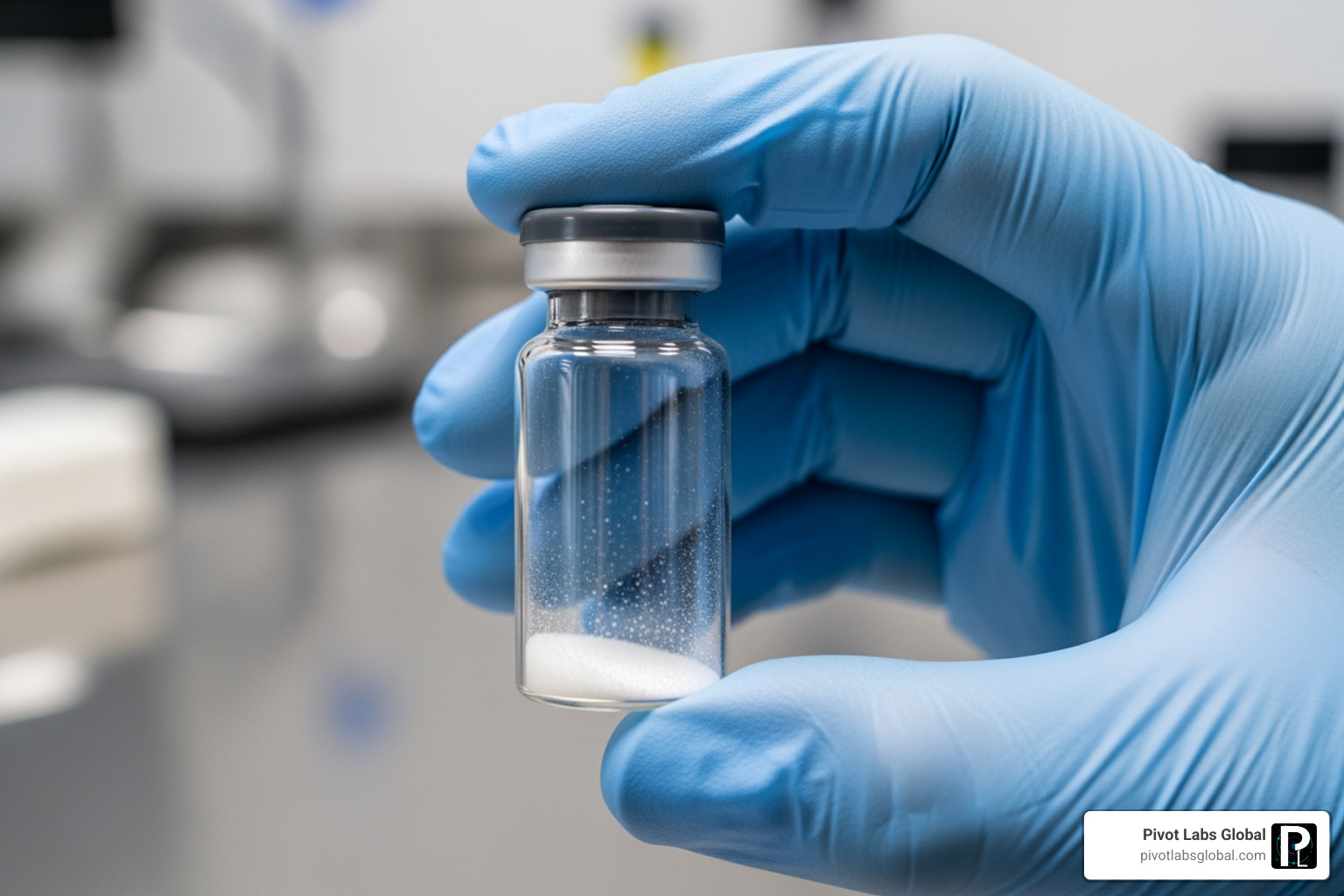
- Lyophilized Powder is Key: Most peptides are delivered as lyophilized (freeze-dried) powder. This form is the most stable for long-term storage. Our peptides, for instance, are delivered lyophilized with trifluoroacetate (TFA) as a counterion and packaged in glass vials, stored under argon to protect from oxygen.
- Storage Temperature: Always store lyophilized peptides at low temperatures, ideally –20°C, in their original, unopened containers. Under these conditions, they can often be stable for several years, with a typical shelf life of over 24 months at -20°C for lyophilized peptides protected by argon.
- Light Sensitivity: Many peptides are light-sensitive. Always protect them from direct light exposure to prevent degradation.
- Avoiding Contamination: Always wear gloves when working with peptides to avoid enzymatic or bacterial contamination from your skin. Use sterile reagents and equipment.
- Reconstitution Techniques: This is where many researchers encounter challenges. Solubilized peptides are significantly less stable than their lyophilized counterparts and should ideally be used immediately. If not, any remaining solution should be re-lyophilized for longer storage.
- Solvent Choice: Use sterile water or appropriate buffers (PBS, Tris, or phosphate, pH 7). For peptides susceptible to oxidation (containing Cys, Met, or Trp), use oxygen-free solvents.
- Hydrophobic Peptides: These are notoriously difficult to dissolve and prone to aggregation. If insoluble in aqueous buffers, a small amount can first be dissolved in a minimal volume of 50% DMSO/water mixture, then diluted with the aqueous solution. Gentle warming (<40°C) or sonication can aid dissolution.
- pH Adjustment: If pH adjustment is necessary, use only very weak bases to prevent peptide inactivation or racemization.
- Avoiding Freeze-Thaw Cycles: Repeated freeze-thaw cycles can degrade peptides. Prepare single-use aliquots after reconstitution to minimize this.
Understanding these best practices ensures that the high-quality peptides you receive from a reliable peptide source remain effective throughout your research.
Review our peptide handling and storage guidelines
Frequently Asked Questions about Sourcing Peptides
We often hear similar questions from researchers looking to optimize their peptide experiments. Here are some common queries and our expert answers:
What is the difference between peptide purity and net peptide content?
This is a critical distinction! Imagine you buy a bag of flour.
- Peptide Purity is like knowing that 98% of the powder in your bag is indeed flour, and only 2% is, say, cornstarch. It tells you the proportion of your target peptide sequence relative to other peptide variants (like deletion sequences or truncated forms).
- Net Peptide Content, on the other hand, is like knowing how much actual flour is in the bag, minus the weight of the bag itself, any moisture absorbed by the flour, or tiny pebbles that might have inadvertently gotten in. The dry peptide powder we ship usually contains not only the pure peptide but also water, absorbed solvents, counterions (like TFA), and salts. Net peptide content indicates the actual weight of the peptide component. It’s typically 50-80% of the total powder weight and is usually determined by amino acid analysis or nitrogen analysis. So, you might have a peptide that is 98% pure, but its net peptide content might be 70%, meaning 70% of the total mass is the actual peptide, and the other 30% is other stuff. Knowing both helps you accurately dose your experiments.
Why are some peptides (e.g., hydrophobic ones) so difficult to synthesize or dissolve?
Ah, the joys of working with tricky peptides! Highly hydrophobic peptides present several challenges:
- Synthesis Difficulty: During synthesis, these peptides are prone to aggregation. Imagine trying to build a LEGO structure where the bricks keep sticking to each other in random clumps instead of forming the intended design. This aggregation prevents the effective coupling of subsequent amino acids, making synthesis extremely difficult.
- Purification Challenges: Once synthesized, their stickiness doesn’t go away. Hydrophobic peptides tend to adhere strongly to purification columns, making them hard to elute and purify effectively.
- Solubilization Issues: In solution, their strong tendency to aggregate means they resist dissolving in aqueous buffers. Instead of forming a clear solution, they might form cloudy suspensions or even precipitate out, rendering them unusable for experiments. This is why specialized techniques, like using small amounts of organic co-solvents (DMSO, DMF, acetonitrile) or specific pH adjustments, are often necessary to get them into a usable state.
What does ‘For Research Use Only’ legally mean for a scientist?
The phrase “For Research Use Only” is more than just a label; it’s a critical legal and ethical designation that defines the intended use of a product and places responsibilities on the purchaser. When a product, such as a peptide, is marked “For Research Use Only” (RUO), it means:
- Not for Human or Animal Consumption: The product has not been evaluated or approved by regulatory bodies like the FDA for use in humans or animals, whether for diagnosis, treatment, cure, or prevention of any disease. Consuming or administering RUO peptides is strictly prohibited and can have serious health and legal consequences.
- Laboratory/In-Vitro Experimental Use Only: The product is intended solely for scientific investigation in a laboratory setting, typically in vitro (in glass, like cell culture) or potentially in vivo in ethically approved animal models if the context is purely research and not therapeutic development.
- No Therapeutic Claims: Any statements made about the product’s potential effects have not been evaluated by the FDA and are not intended to imply therapeutic benefits.
- Purchaser Responsibility: As the purchaser, you are responsible for understanding and complying with all applicable local, state, and federal laws regarding the handling and use of these products. You must also ensure that the products are handled only by qualified and properly trained research or laboratory professionals.
This disclaimer protects the supplier from liability for misuse and ensures that researchers understand the strict boundaries within which these powerful tools can be employed. At Pivot Labs Global, we take this very seriously, and we expect our valued research partners to do the same.
Conclusion: Partnering with the Right Supplier for Research Success
In the intricate world of peptide research, the quality of your starting materials directly dictates the validity and reproducibility of your results. As we’ve explored, finding a reliable peptide source isn’t merely about placing an order; it’s about partnering with a supplier that embodies transparency, expertise, and an unwavering commitment to quality.
For US-based researchers, prioritizing suppliers with a strong domestic presence, robust quality control measures, and clear regulatory compliance offers distinct advantages. Whether you require the convenience of catalog peptides or the bespoke precision of custom synthesis, understanding the nuances of purity, net peptide content, and the critical role of third-party testing will empower you to make informed decisions.
Remember the red flags: vague claims, missing documentation, and unrealistic promises are signs to steer clear. Instead, seek out suppliers who openly share their analytical data, adhere to best practices for synthesis and handling, and are transparent about their processes.
At Pivot Labs Global, we understand these challenges intimately. Our commitment to 99% purity, backed by comprehensive third-party lab testing for purity, sterility, endotoxins, and heavy metals, ensures that every peptide you receive meets the highest standards. We are dedicated to providing the high-quality, verified peptides you need, delivered swiftly with same-day shipping on all US orders. By choosing a truly reliable partner, you not only secure superior reagents but also fortify the integrity of your long-term research, paving the way for groundbreaking findies.
Explore our comprehensive Analytical Testing Solutions