
Blog
The Ultimate Guide to BPC 157 Arginate and Its Healing Potential

The Next Wave in Regenerative Science
BPC 157 arginate is a modified form of the peptide BPC-157 that uses an arginine salt to improve stability, bioavailability, and absorption compared to traditional formulations. Here’s what researchers need to know:
Quick Overview:
- What it is: A synthetic peptide derived from a gastric juice protein, stabilized with arginine salt
- Key advantage: Improved metabolic resistance and improved oral absorption versus standard BPC-157 acetate
- Primary research areas: Tissue repair, gut health, inflammation reduction, and systemic recovery
- Regulatory status: Investigational compound (FDA Category 2) – for research use only, not FDA-approved
- Safety note: Lacks comprehensive human clinical trial data; quality varies widely among suppliers
The conversation around BPC-157 has exploded in recent years. Google searches hit an all-time high in 2024, with over 50 million video views across social platforms. Yet most of this buzz focuses on standard BPC-157, while the arginate form remains less understood despite offering potentially superior pharmacokinetic properties.
The science is compelling but preliminary. Preclinical studies show BPC-157 promotes angiogenesis, accelerates tissue repair, and reduces inflammation markers like TNF-α and IL-6. The arginate modification appears to improve sequence stability and gastric acid tolerance, potentially making it more effective for oral administration and systemic applications.
However, the current evidence base remains predominantly theoretical and preclinical. Most research involves animal models, with minimal human clinical data. This creates a significant gap between marketing claims and verified scientific evidence – a gap that matters deeply to researchers who need reliable, high-purity compounds for legitimate study.
I’m Max Shemesh from Pivot Labs’ Peptide Innovation & Research Team, where we focus on developing rigorously tested BPC 157 arginate formulations that meet the strict quality standards research demands. Our work centers on ensuring that investigators have access to compounds with verified purity and consistency, enabling credible scientific inquiry into this promising but still investigational peptide.
Understanding BPC-157 and Its Mechanisms
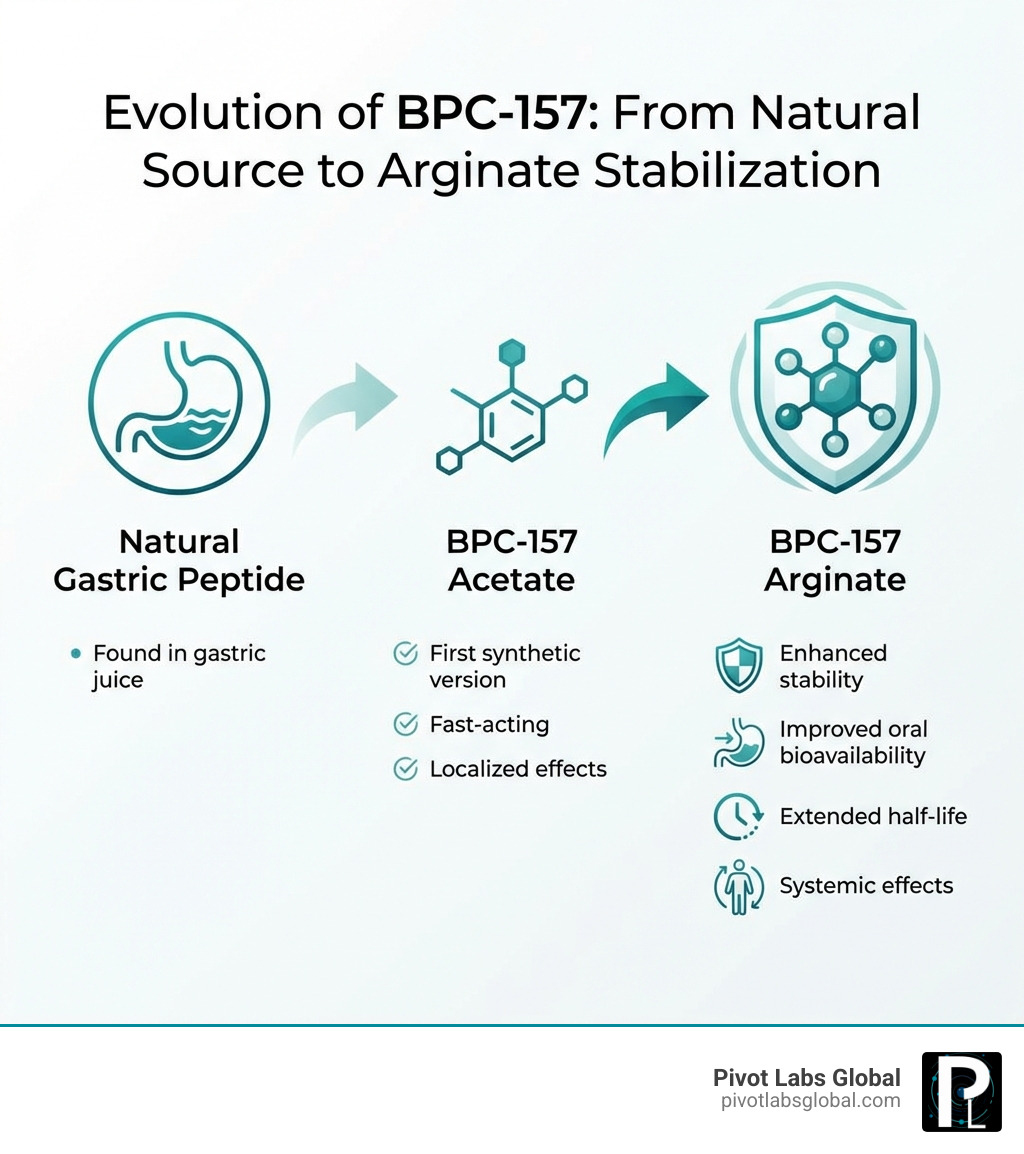
BPC-157, or Body Protection Compound-157, is a synthetic peptide originally isolated from human gastric juice. It’s a pentadecapeptide, meaning it’s composed of 15 amino acids. This fascinating compound has garnered significant attention in the scientific community for its potential to accelerate tissue regeneration, improve gut health, and reduce inflammation. But how does it achieve these remarkable feats? Let’s explore the proposed mechanisms of action.
One of the core ways BPC-157 works is by promoting angiogenesis – the formation of new blood vessels. Think of it like building new highways to deliver essential nutrients and oxygen to injured tissues, drastically speeding up the healing process. This pro-angiogenic effect is often linked to the upregulation of pathways like VEGFR2-Akt-eNOS, critical for cellular growth and migration. It also encourages collagen synthesis, the structural protein vital for the integrity of muscles, tendons, and ligaments.
Beyond its direct effects on tissue, BPC-157 plays a significant role in modulating the body’s inflammatory response. It helps to calm chronic inflammation at the source by decreasing inflammatory markers such as COX-2, MPO, IL-6, and TNF-α. This anti-inflammatory action is crucial for recovery, as unchecked inflammation can hinder healing.
Interestingly, BPC-157’s influence extends to the nervous system. Research suggests it interacts with the nitric oxide pathway, a key signaling system in both the gastrointestinal and cardiovascular systems. Furthermore, studies indicate it can modulate dopamine and serotonin pathways, which are neurotransmitters involved in mood, behavior, and even pain perception. For example, BPC-157 has been shown to attenuate chronic amphetamine-induced behavior disturbances and influence regional serotonin synthesis in the rat brain. Its neuroprotective effects are also being explored in models of traumatic brain injury and spinal cord injuries.
How BPC-157 Promotes Tissue Repair
When we talk about tissue repair, BPC-157 seems to be a star student. In preclinical animal models, it has consistently demonstrated a remarkable ability to accelerate the healing of various musculoskeletal injuries. We’re talking about everything from fractures and muscle tears to damaged tendons and ligaments.
Consider a tendon injury, a common woe for athletes and active individuals. BPC-157 has shown the ability to promote tendon outgrowth, improve cell survival, and encourage cell migration, all crucial steps in effective tendon healing. It even aids in the complex process of tendon-to-bone healing, a notoriously difficult area to repair. For instance, studies on Achilles detachment in rats show BPC-157 promotes this healing, even counteracting the negative effects of corticosteroids.
It’s not just tendons; muscle crush injuries and ligament recoveries have also seen impressive results in animal studies. BPC-157 works its magic by enhancing fibroblast proliferation – the growth of cells that synthesize collagen and connective tissue – and activating growth factors essential for repair. This means faster recovery and improved structural integrity for the injured tissue.
The Role of BPC-157 in Gut Health and Inflammation
Our gut is often called our “second brain,” and its health is paramount to overall well-being. BPC-157 originated from gastric juice, so it’s no surprise that it has a profound impact on gastrointestinal health. This peptide is extensively studied for its ability to protect the gastric lining, manage inflammation, and assist in comprehensive gastrointestinal healing.
In animal models, BPC-157 has shown significant benefits in reducing inflammation caused by toxins like trinitrobenzene sulfonic acid (TNBS) and cysteamine, which are often used to induce inflammatory bowel disease (IBD)-like conditions. It effectively reduces both inflammatory biomarkers and visible damage. It’s like having a tiny, dedicated repair crew patching up the gut lining!
Beyond general inflammation, BPC-157 has demonstrated an impressive ability to mend various types of fistulas (abnormal connections between organs) and anastomoses (surgical connections) in rats. It even shows promise in ameliorating short bowel syndrome, a severe condition where the body struggles to absorb nutrients. Its cytoprotective mechanisms help maintain the integrity of the gastrointestinal tract, offering protection against a range of injuries, including those induced by NSAIDs and even clopidogrel.
This comprehensive healing effect on the gut is partly due to BPC-157’s ability to modulate the body’s inflammatory response, helping to calm chronic inflammation at its source. For those interested in a deeper dive into its gut-protective properties, we recommend exploring the research on gastrointestinal protection by BPC-157.
What Makes BPC 157 Arginate a Next-Generation Peptide?
While BPC-157 is already a fascinating peptide, the introduction of BPC 157 arginate, also known as Pentadeca Arginate Peptide (PDA), marks a significant step forward. Imagine giving a well-performing car a turbo boost – that’s essentially what the arginate modification aims to do for BPC-157.
The key difference lies in the addition of an arginine salt. This modification is designed to improve several critical properties: improved bioavailability, better absorption, and increased metabolic resistance compared to traditional BPC-157 acetate formulations. In simpler terms, it’s engineered to be more stable, last longer in the body, and potentially work more effectively, especially when administered orally.
The Unique Advantages of BPC 157 Arginate (PDA)
The arginate modification bestows several unique advantages upon BPC 157 arginate (PDA). Firstly, it significantly improves sequence stability. Peptides, by nature, are delicate molecules susceptible to degradation by enzymes and harsh environments, like the acidic conditions of the stomach. The arginate modification provides superior resistance to enzymatic degradation and improved gastric acid tolerance. This means that more of the active peptide can survive the journey through the digestive system, making oral administration potentially more viable and effective.
This improved stability translates into improved metabolic resistance and, crucially, improved bioavailability. Think of it this way: if standard BPC-157 is a quick sprint, BPC 157 arginate is a marathon runner, maintaining its presence and activity in the system for longer periods. This extended detectability and more consistent systemic activity contribute to what researchers hope will be a superior therapeutic profile.
The molecular formula for BPC 157 arginate (with arginate salt modification) is C62H98N16O22, with a molecular weight of approximately 1419 Da. This specific chemical structure is what allows for its improved properties.
While standard BPC-157 is often favored for targeted, localized action, particularly through injections near an injury site, BPC 157 arginate is positioned for a more systemic effect. This makes it potentially more suitable for diffuse inflammation or situations involving multiple injury sites, where a broader reach is desired. It offers extended stability and tissue penetration, providing whole-body regenerative and anti-inflammatory effects with steadier plasma levels.
However, it’s important to approach these claims with a researcher’s discerning eye. While the theoretical advantages are clear, some critical analyses suggest that the marketed ‘stable’ forms of BPC-157 (including the arginine variant) may still succumb to peptidase degradation in the small intestine and become less effective due to increased polarity at higher pH levels. This underscores the importance of rigorous testing and verified quality, which is where Pivot Labs Global steps in. We believe in transparency and diligence, ensuring that our researchers have access to compounds with verifiable purity. For more on how we ensure quality, check out More info about peptide quality.
Table Comparing BPC-157 Acetate vs. BPC-157 Arginate
Let’s lay out the key differences between the two primary forms of BPC-157 that researchers encounter:
| Feature | BPC-157 Acetate (Standard BPC-157) | BPC 157 Arginate (PDA) |
|---|---|---|
| Formulation | BPC-157 bound to an acetate salt | BPC-157 bound to an arginine salt |
| Sequence Stability | Good, but susceptible to degradation in harsh environments | Improved; superior resistance to enzymatic degradation and gastric acid tolerance |
| Oral Bioavailability | Limited due to gastric acid and enzymatic breakdown; often requires enteric coating | Improved due to improved stability and metabolic resistance; potentially higher absorption |
| Half-Life | Relatively short (less than 30 minutes in the liver) | Potentially longer dueiding to improved metabolic resistance and extended detectability |
| Primary Application | Targeted, localized effects (e.g., direct injection at injury site) | Systemic effects for diffuse issues; potentially more effective for oral administration |
| Metabolic Resistance | Standard | Improved |
| Molecular Weight | Approx. 1419 Da (similar, slight variations based on salt) | Approx. 1419 Da |
Safety, Regulation, and Proper Use
When exploring compounds like BPC 157 arginate, it’s crucial to steer the landscape of safety, regulation, and proper use with extreme care. As researchers, our commitment to scientific integrity and ethical practices is paramount.
Regulatory Status: FDA and WADA
Here in the United States, and globally, the regulatory status of BPC 157 arginate is unequivocal: it is an investigational compound. The FDA has classified BPC-157 as a Category 2 bulk drug substance. What does this mean? Essentially, there is insufficient evidence to determine its safety for compounding, and it has been explicitly excluded from the FDA’s list of bulk drug substances that can be used in pharmaceutical compounding. This means it is not FDA-approved for human therapeutic use or commercial pharmaceutical compounding. Any use in humans is strictly off-label and not supported by official regulatory bodies.
For athletes, the message is equally clear. The World Anti-Doping Agency (WADA) has included BPC-157 on its 2022 Prohibited List under section S0: Non-Approved Substances. This means BPC 157 arginate, like its acetate counterpart, is banned in competitive sports. Major athletic organizations, including the UFC and NFL, also prohibit its use. As researchers, be aware of these classifications, especially if your work involves any aspect of sports science or performance.
This classification highlights that while BPC-157 and its arginate form show immense promise in preclinical research, they are far from being recognized as safe or effective for general human use. They remain purely research chemicals.
Safety Profile and Side Effects of BPC 157 Arginate
The safety profile of BPC 157 arginate is largely extrapolated from studies on standard BPC-157, which predominantly involves preclinical animal models. In these studies, BPC-157 has generally shown a good safety profile, with no acute (<6 weeks) gross or histologic toxicity across various organs, including the liver, spleen, lung, kidney, and brain, even at high doses (up to 250 mg/kg). No toxic or lethal dose (LD50) has been established within tested ranges in animals.
However, the critical caveat here is the lack of human clinical trials for BPC 157 arginate specifically, and very limited human data for BPC-157 in general. This means we have insufficient evidence to definitively assess its safety and efficacy in humans. The “improved potency” of the arginate form, while a potential advantage, also necessitates improved medical supervision if ever considered for human application.
When we consider the broader landscape of research chemicals, the risks are compounded by unregulated manufacturing and potential contamination. Many products marketed online may not adhere to strict quality control standards. Contamination rates in unregulated supplements can range significantly, from 12% to as high as 58%. This means a researcher could inadvertently be working with a product that is impure, incorrectly dosed, or contains undeclared substances, which could skew research results or pose unforeseen risks.
Anecdotal reports from online users of BPC-157 (not necessarily arginate) have mentioned potential side effects such as injection site pain, anxiety, palpitations, and fatigue. However, these are not from controlled clinical settings and cannot be reliably attributed solely to the peptide itself or its specific form.
At Pivot Labs Global, we understand these concerns deeply. The integrity of your research relies on the purity and consistency of your compounds. That’s why we guarantee 99% purity for our peptides, backed by comprehensive 3rd party lab testing for purity, sterility, endotoxins, and heavy metals. This commitment to quality is crucial for any credible scientific inquiry. Learn more about our stringent processes at Beyond the Label: Ensuring Quality with 3rd Party Tested Peptides.
Administration Routes: Oral vs. Injectable
The choice of administration route for BPC 157 arginate depends heavily on the research objective, as each method offers distinct advantages and targets different physiological effects.
Oral Administration: For research focusing on gut health, systemic inflammation, or general systemic effects, oral administration of BPC 157 arginate is often considered. The arginate modification is specifically designed to improve its stability against stomach acid and digestive enzymes, potentially leading to better absorption compared to standard BPC-157 acetate. When taken orally, it’s believed to have a strong first-pass effect, acting directly on the gastrointestinal lining and liver. Studies in rats have shown that orally administered BPC-157 can be as effective as injections for certain gastrointestinal healing processes. Researchers might consider this route for studies on:
- Gastric ulcers, leaky gut, or inflammatory bowel disease models.
- Systemic repair and management of chronic inflammatory problems.
Injectable Administration (Subcutaneous or Intramuscular): When the research aims to study localized tissue repair, such as for musculoskeletal injuries, injectable routes (subcutaneous or intramuscular) are typically preferred. Injecting near the damaged tissue allows for a more concentrated and targeted effect. It ensures the peptide directly enters systemic circulation for broader healing effects, or specifically at the site of injury for localized repair. This route offers more direct control over dosing and is often considered more potent for specific orthopedic or systemic studies. Researchers might use injections for:
- Healing muscle strains, ligament damage, or tendon injuries.
- Accelerating recovery from experimental surgical models.
- Studying specific tissue regeneration in a controlled manner.
For researchers requiring precise forms of BPC-157 for their studies, we offer various options custom for research use, such as BPC 157 250mcg, BPC 157 5mg, and BPC 157 10mg.
The Future of BPC-157 Research
The journey of BPC 157 arginate is still very much in its early phases, but the horizon is brimming with possibilities. While current research is predominantly preclinical, the scientific community is eagerly anticipating the next steps, particularly large-scale human clinical trials. It’s like watching a promising rookie athlete – we’ve seen the raw talent, and now we’re waiting for them to hit the big leagues.
The field of BPC-157 research is evolving rapidly, driven by the compelling preclinical data. The potential for this peptide, especially its improved arginate form, to revolutionize regenerative medicine is a significant motivator. However, we must acknowledge the limitations: the current evidence base remains largely theoretical and preclinical, with limited human clinical data. This gap is the next frontier for scientific exploration.
Insights from various sources, including discussions on the Huberman Lab Podcast, often highlight the immense potential of peptides like BPC-157 for tissue repair and recovery, while also underscoring the importance of understanding the science and regulatory landscape. These discussions play a crucial role in raising awareness and guiding further investigation.
Emerging Applications and Priority Research
The potential applications for BPC 157 arginate are vast and diverse, spanning multiple areas of health and healing. Researchers are currently exploring its promise in several key areas:
- Traumatic Brain Injury (TBI) and Neuroprotection: Given BPC-157’s known neuroprotective effects and influence on neurotransmitter pathways, BPC 157 arginate is a priority for research into TBI and other neurological conditions. Studies have already indicated its potential in counteracting hippocampal ischemia/reperfusion injuries.
- Post-Surgical Recovery and Wound Healing: The ability of BPC-157 to accelerate tissue repair and promote angiogenesis makes it an ideal candidate for research into enhancing recovery after surgery and improving wound healing outcomes.
- Age-Related Degenerative Conditions: As our understanding of aging deepens, researchers are investigating how BPC 157 arginate might play a role in mitigating age-related tissue degeneration and promoting cellular longevity.
- Metabolic Disorders and Diabetes Complications: Early research suggests BPC-157’s involvement in metabolic processes, making it a candidate for studying its impact on metabolic disorders and the various complications associated with diabetes.
- Cardiovascular Protection: BPC-157 has shown the ability to counteract myocardial infarction in animal models, suggesting a role in cardiovascular health and protection.
The priority research areas moving forward are clear:
- Large-scale human clinical trials: These are essential to validate preclinical findings and establish evidence-based practice guidelines.
- Comparative studies: Research comparing BPC 157 arginate with its acetate form and other regenerative therapies will clarify its unique advantages.
- Standardized dosing protocols: Establishing safe and effective dosing for various conditions in humans is a critical step.
- Long-term safety studies: Understanding any potential long-term effects is paramount.
- Drug interaction studies: Investigating how BPC 157 arginate interacts with other medications.
- Mechanism elucidation: Further detailed studies to fully understand its molecular pathways.
The journey from promising research chemical to approved therapeutic is long and arduous, but the dedication of researchers worldwide continues to push the boundaries of what’s possible with compounds like BPC 157 arginate.
Frequently Asked Questions about BPC-157 Arginate
As a research-grade peptide with significant potential, BPC 157 arginate naturally sparks a lot of questions. Let’s tackle some of the most common ones we encounter in the research community.
Is BPC-157 Arginate the same as regular BPC-157?
No, BPC 157 arginate is not exactly the same as regular BPC-157 (often referred to as BPC-157 acetate). While they share the same core 15-amino-acid peptide sequence, the key difference lies in the salt form they are bound to. BPC 157 arginate is stabilized with an arginine salt, whereas traditional BPC-157 is typically bound to an acetate salt.
This arginine modification is designed to improve several properties, particularly stability against degradation in harsh environments like stomach acid, and to improve absorption and metabolic resistance. The goal is to make BPC 157 arginate more bioavailable, especially through oral administration, and to potentially extend its effects by allowing it to circulate longer in the system. So, while functionally similar in its healing potential, the arginate form offers distinct pharmacokinetic advantages, aiming for more systemic effects compared to the often more localized action of standard BPC-157 acetate.
Is BPC-157 Arginate legal to purchase?
Yes, BPC 157 arginate can be legally purchased for research purposes only. It is crucial to understand that it is not approved by the FDA for human consumption or therapeutic use. It falls under the category of “research chemicals,” meaning it is intended solely for in-vitro (test tube) or in-vivo (animal) scientific studies, not for self-administration or medical treatment in humans.
Furthermore, it is important to reiterate that BPC 157 arginate is banned by WADA (World Anti-Doping Agency) and other major athletic organizations for use in competitive sports. This means athletes should be particularly cautious. Anyone considering working with this compound should ensure they are doing so within the legal and ethical boundaries of research.
What are the main risks of using BPC-157?
The primary risks associated with using BPC-157 (and by extension, BPC 157 arginate) stem from several key factors:
- Lack of Human Safety Data: The most significant risk is the absence of comprehensive long-term human clinical trials. While preclinical animal studies have generally shown a good safety profile, these results do not directly translate to humans. We simply do not have sufficient data on human dosages, potential long-term side effects, or interactions with other medications.
- Unregulated Manufacturing and Contamination: The market for research chemicals can be rife with products from unregulated manufacturers. This poses a substantial risk of contamination with other substances, incorrect dosages, or impurities. Such contaminants can lead to unexpected side effects or compromise the integrity of research findings.
- Unknown Clinical Safety: Due to the lack of human trials, the clinical safety profile of BPC-157 for human use remains largely unknown. Anecdotal reports of side effects from individuals who have used it outside of research settings exist, but these are not scientifically verified.
- Misinformation: The widespread availability of information (and misinformation) online can lead individuals to use these compounds without proper understanding or supervision, increasing risks.
For these reasons, it is critical that any use of BPC 157 arginate be strictly confined to controlled laboratory research settings. Researchers must prioritize sourcing their compounds from reputable suppliers who provide verifiable 3rd party lab testing to ensure purity and prevent contamination. This helps mitigate some of the inherent risks associated with working with investigational compounds.
Conclusion: A Promising but Investigational Tool for Research
The emergence of BPC 157 arginate represents an exciting evolution in the study of regenerative peptides. Its modified structure, designed for improved stability, bioavailability, and absorption, offers researchers a potentially more potent and versatile tool for investigating tissue repair, gut health, and inflammation reduction. The theoretical advantages of BPC 157 arginate over traditional BPC-157 acetate are compelling, particularly for studies requiring improved oral efficacy or systemic action.
However, it is paramount to underscore its current status: BPC 157 arginate remains an investigational compound, strictly for research-use only. The scientific community, including us at Pivot Labs Global, eagerly awaits the results of future rigorous studies, especially human clinical trials, to fully understand its efficacy, safety, and optimal applications. The path from preclinical promise to clinical application is long and requires meticulous scientific inquiry.
For researchers dedicated to advancing our understanding of this remarkable peptide, the importance of quality cannot be overstated. Compromised purity, inconsistent dosing, or undeclared contaminants can derail an entire study and even pose ethical concerns. At Pivot Labs Global, we are committed to providing the highest quality research peptides. We guarantee 99% purity for our compounds, backed by rigorous 3rd party lab testing for purity, sterility, endotoxins, and heavy metals. When your research demands precision and reliability, trust in compounds that meet the highest standards.
We invite you to explore our extensive catalog of high-purity research peptides and join us in pushing the boundaries of scientific findy. Your next breakthrough might just be a peptide away. Explore our catalog of high-purity research peptides.